
Coffee and Food Pairings: How to Match Your Brew with Breakfast, Snacks, and Desserts
Coffee and Food Pairings: How to Match Your Brew with Breakfast, Snacks, and Desserts
When you're not sure whether your coffee is actually working with what you're eating — whether it's breakfast, an afternoon snack, or dessert — two principles cut through the guesswork: layer similar aromas for harmony, or use contrast to cleanse the finish.
When you're not sure whether your coffee is actually working with what you're eating — whether it's breakfast, an afternoon snack, or dessert — two principles cut through the guesswork: layer similar aromas for harmony, or use contrast to cleanse the finish. This article is written for both the beginner who wants a more intentional cup alongside their morning meal, and the home brewer who wants to refine pairings by factoring in roast level and extraction method. I'll break the pairing logic down by three everyday moments: breakfast, snacks, and dessert.
My own routine: on busy weekday mornings I pair buttered toast with a City Roast poured at 92°C — the butter's aroma and the coffee connect naturally without much effort. On weekend mornings after a traditional Japanese breakfast, I brew a light-to-medium roast more slowly at 88–90°C, and the gentler acidity sits much more comfortably on the stomach. These aren't fixed rules — they're the starting points I came back to while building the pairing framework in this article. Aroma alone doesn't capture every pairing dynamic, so I've included roast level, flavor intensity, and the difference between pour-over and immersion methods to give you a framework you can actually reproduce at home.
Working through the Japanese, Western, and Chinese breakfast comparisons, the dessert quick-reference table, and the basic one-cup recipe, you'll find combinations that hold up without specialty equipment or expensive beans. I keep the health and pricing commentary honest rather than prescriptive — the goal is a set of choices that fit into a real daily routine.
How to Think About Coffee and Food Compatibility
Food pairing is the practice of matching food and drink based on shared or complementary aromas and flavors. For coffee, I work with two frameworks: harmony (layering shared aromas to create a sense of unity) and contrast (using acidity or bitterness to clean up the finish). Because coffee's character shifts so dramatically with origin, roast level, and brewing method, relying on just one of these frameworks tends to be limiting — the two work better in tandem at the everyday table.
Before either of those frameworks, though, the most reliable starting point is matching intensity. Light food pairs well with lighter coffee; rich, fatty, or salty food calls for something with more body. Pour a dark roast over a breakfast of fruit and yogurt and the roast character and bitterness will overshadow the delicate flavors. Go the other way — a light roast with scrambled eggs, bacon, and buttered bread — and the coffee might have beautiful aromatics but still feel underpowered against all that richness.
I notice this most clearly with croissants. A light roast brings out lovely floral notes, but the buttery layers push back. Switching to a medium roast fills the gap — the rounder sweetness lands between the butter and the toasty crust, and what felt like two separate experiences starts to flow as one.
Thinking in three broad roast tiers, here's how the flavor characteristics map out:
| Roast level | Acidity | Bitterness | Sweetness | Body | Aroma |
|---|---|---|---|---|---|
| Light | Bright, lifted | Restrained | Clean, transparent | Light | Floral, citrus |
| Medium | Balanced, gentle | Moderate | Round, present | Medium | Nuts, caramel |
| Dark | Settled | Clearly present | Roasty sweetness | Full | Cacao, roasted nuts |
Light roasts pair cleanly with lighter fare and anything fruit-forward, where you want the edges to stay defined. Medium roasts are the all-rounders — with acidity, sweetness, and bitterness in reasonable balance, they handle toast, granola, and croissants without fuss. Dark roasts are better suited to egg dishes, bacon, and caramel-leaning sweets, where the fat and sugar need something substantial to meet them. When in doubt, starting from medium roast is hard to get wrong — that's what the range is for.
Extraction method matters too. A pour-over (like the HARIO V60 or Chemex) produces a clear, clean cup where acidity and aroma are well-defined — useful when you want to pick up the subtle char on toast, the fruitiness of jam, or the dashi (Japanese soup stock) notes in a Japanese breakfast. An immersion brewer like the French Press, by contrast, passes the liquid through a metal mesh and retains more oils, giving the cup more texture and bringing sweetness forward. It's the more natural companion for butter, eggs, and cream-based desserts. Even with the same medium roast bean, a pour-over will emphasize brighter, nutty notes while a French Press brings out a lingering caramel sweetness. In everyday pairing, that difference is worth paying attention to.
ℹ️ Note
When a pairing isn't working, match the "weight" of the food against the "body" of the brew before adjusting anything else. Adding immersion for heavier dishes and pour-over for lighter ones to your thinking gives you more precision than roast level alone.
Three Pairing Rules to Start With
When deciding a pairing on your own, three reference points are more useful than theory. I touched on harmony versus contrast already, but at the actual table, something more tactile is helpful. The three things I look at first: match intensity, use acidity or bitterness to anchor the finish, and bring body when fat or sweetness is the main character. Just these three will improve your accuracy noticeably across breakfast, snacks, and dessert.
- Match intensity
The easiest way to avoid a misfire is to match the "weight" of the food with the "weight" of the cup. For lighter textures — yogurt, fresh fruit, a plain biscuit — a light to medium roast brewed with a gentle hand lets the aromas stay crisp. Think of a HARIO V60 pour-over pulling bright acidity and a touch of florals cleanly through. For heavier fare — bacon and eggs, butter-rich toast, caramel-tinged baked goods — a medium-dark to dark roast, or an immersion brew that foregrounds body, won't get overwhelmed.
A clear example of harmony: dorayaki (a traditional Japanese red bean pancake) with a medium roast. The gentle sweetness of the dorayaki filling — think black sugar and a round, mellow softness — lands alongside the similar sweetness in a City Roast, and the quiet finish of the sweet red bean paste stays intact. I've found that pushing the bitterness too high here actually works against the filling's flavor. On the other hand, something like a butter-heavy bread changes the equation. A light roast alone might get pushed back, so either pull a light roast at a slightly higher temperature to get some sharper acidity acting as a cut, or lean into a City Roast for the toasty affinity — either way, you're making an intentional choice.
- Acidity and bitterness as balance tools
The second angle: using coffee as a palate cleanser rather than a companion. With rich or fatty food, acidity resets the mouth. A light roast brewed at a slightly higher water temperature — something with bright, citrus-forward character — lifts the fat from buttery bread and makes the next bite feel lighter. That's not harmony; that's contrast working as a palate reset.
The cold, sweet end works in reverse: bitterness and body do the job. An affogato (hot espresso poured over vanilla ice cream) is the classic case — the bitterness tightens the sweetness, and the temperature contrast opens up the aromatics. The same logic holds for custard or dairy-heavy desserts: a medium to dark roast with cacao or caramel notes keeps the sweetness from going flat. For something like a custard pudding (プリン, purin in Japanese) — that custardy egg-and-milk sweetness — a milky coffee or medium-and-up roast pairs naturally.
- Body for fat and sweetness
Butter, cheese, cream, sweet red bean paste, caramel — when fat or sweetness is the star, you want body in the cup to meet it. Medium-dark and dark roasts are the obvious choices, but you can also switch the brewing method to immersion to add texture. I often use cheese toast as the example. Same beans, but switching from a HARIO V60 to a French Press changes everything. The pour-over gives you clean, defined saltiness and char — a sharp morning cup. The French Press brings the oils up, the nutty character comes forward, and the saltiness of the cheese softens. The toast's crust and the coffee's body merge into one thing. The center of gravity of the whole table shifts lower.
Milk-based coffee is a natural option here too. A café au lait — typically coffee and milk around 1:1 — adds the milk's gentleness to the equation, which is why it works particularly well alongside custard pudding, cinnamon rolls, and butter-heavy toast. There are moments where a softer landing is what makes the whole combination cohere, rather than a clean, assertive cut.
💡 Tip
[!NOTE]
With those three principles in hand, the logic becomes easier to navigate: for sweet harmony, try dorayaki with medium roast; to cut through fat, try a light roast with butter-rich bread; to anchor cold sweetness, reach for ice cream with dark roast or espresso. Start by putting a City Roast in the center, look at whether the food is light or heavy, sweet or fatty, and the direction of your next cup will emerge naturally.
Breakfast Pairings
Coffee alongside breakfast makes more sense than downing it on an empty stomach — with food, or just after, the flavors integrate properly. On the health side, a CNN-reported study categorized "morning" as 4:00–11:59 a.m. and found that morning-only coffee drinkers showed a 16% reduction in all-cause mortality and a 31% reduction in cardiovascular mortality. That doesn't translate directly to a "best time to drink" prescription, but it adds some weight to the idea of weaving your coffee into the rhythm of breakfast rather than rushing it. And with cortisol levels tending to peak around 8–9 a.m., waiting until your food is ready before brewing seems to serve both the physiology and the flavor.
Western Breakfast
A Western breakfast — buttered toast, croissants, scrambled eggs, bacon, fried eggs, plain yogurt — spans a range of intensities: the fragrance of bread and butter, the richness of eggs and fat, the lighter acidity of yogurt and fruit. That spread means you have room to move on roast level depending on what's at the center of the plate.
For toast and croissants, where the wheat's fragrance and butter's sweetness are the focal point, medium roast is the natural starting point. At home, I usually set up a HARIO V60 at a coffee-to-water ratio of 1:15–1:17 (as a rough guide), at a slightly higher water temperature. These numbers are drawn from my own experience and align with generally accepted ranges, not a standardized official recipe — the HARIO company hasn't published a single universal recipe, so treat them as a starting point to adjust from. For origin, Brazil Natural and Colombia Washed tend to deliver the sweetness and roundness that pair well here.
On a typical weekday morning with buttered toast, I'll work at 92°C, 1:16, about 2 minutes 50 seconds. That hits the aromatic core without over-extraction, and the result neither cuts through the butter's softness too aggressively nor gets buried under it. A City Roast-leaning Brazil or Guatemala locks onto the toasty, sweet edges of the bread crust.
When egg dishes are the main act, you need another level of body. For scrambled eggs, omelettes, or bacon and eggs, medium-to-dark or darker roasts are in range. The flavor direction shifts toward cacao, roasted nuts, and a slightly bitter sweetness. French Press works well here — the oils from the metal mesh filter echo the round richness of the egg. Mandheling from Indonesia, a deep-roasted Guatemala, or a Brazil Pulped Natural are natural candidates. Avoid pushing so far dark that char dominates the cup; even with a dark roast, something with a sweet rather than scorched finish will serve breakfast better.
For lighter mornings anchored around yogurt and fresh fruit, the earlier end of light-to-medium roast comes alive. Ethiopian Washed brings a floral, almost tea-like lightness; Kenyan Washed has a vivid fruit quality that lines up naturally with plain yogurt, honey, and berry toppings. A pour-over method works best — a HARIO V60 or Chemex. The Chemex in particular tends to settle nicely at around 93°C, a 1:15–1:16 ratio, and 4–5 minutes, yielding a clean, transparent cup that doesn't intrude on the softness of the dairy.
Japanese Breakfast (和食, washoku)
A traditional Japanese breakfast in Japan — grilled fish, miso soup, natto (fermented soybeans), rice, pickles — is high in umami but lower in fat than a Western spread. The approach here isn't to push through with bitterness but to keep the delicate dashi (Japanese soup stock) flavors intact with something in the light-to-medium range.
Grilled fish actually pairs better with a light-to-medium roast than with something too aggressively light. Ethiopian Washed brought a touch further toward medium, a Costa Rica Honey Process, or a Colombia Washed can hold onto citrus brightness while creating a long, clean finish that doesn't fight with the fish's fat and salt. Brew via pour-over with the water temperature a little lower and you'll reduce the angular edges that might clash with the dashi. When miso soup is at the table, keeping the roast character on the floral, citrus, or light honey side avoids a direct collision with miso's fermented funk.
Natto's pronounced fermented aroma is easier to work with using a clean medium roast than by throwing a dark roast at it. Colombia Washed or a medium-roasted Guatemala offers a nutty, gently sweet character that bridges rice and soy sauce without interference. A HARIO V60 pour-over is the safe default, but if you want slightly more roundness, four minutes of French Press steeping at a ratio that keeps things from going heavy works well — the coffee doesn't feel like a foreign element next to the natto's stickiness.
On weekend mornings after a full Japanese breakfast, I'll sometimes brew a light-to-medium roast slowly at 88–90°C over about three and a half minutes. That's a personal approach shaped by experience rather than a universal recipe — the optimal settings vary with your beans, equipment, and ambient conditions. With Ethiopian Washed or a Rwanda Washed with soft fruit notes, it tends to settle quietly without disrupting the mood of the meal.
ℹ️ Note
When a Japanese breakfast has you unsure, try a medium roast at slightly lower temperature using a pour-over before reaching for anything darker. That move tends to prevent grilled fish, miso soup, or natto from competing with the coffee rather than complementing it.
Chinese Breakfast
Chinese breakfast covers a wide range — light constructions centered on steamed dishes all the way through to fried crullers (youtiao), pork buns (nikuman in Japanese, 肉包), shumai, congee, soy milk, and dishes with spices. For lighter fare like dim sum and steamed chicken, a bright light roast can cut through the oils cleanly. For meatier options like pork buns and shumai, where umami and fat are more dominant, a medium-to-medium-dark roast earns its place.
For lighter dishes — steamed shrimp dumplings (har gow), steamed chicken, plain congee — a clean Washed-process light roast fits well. Ethiopian, Kenyan, or Panamanian beans through a HARIO V60 with good flow produce a cup that leaves the palate refreshed. Target notes: citrus, white flowers, herbs, light tea character. The idea is to sharpen the outline of the meal without erasing the sweetness of the dumpling wrappers or the gentle saltiness of the congee.
For something meatier — pork buns, shumai, xiao long bao (soup dumplings) — medium-to-medium-dark roasts are the better fit. Brazil Natural, Guatemala Washed, or an Indonesian Sumatra-type bean, with nut, cacao, and spice character, connects naturally with the savory fat of the filling. Pour-over works fine, but French Press is worth trying if you want more texture. The full-bodied liquid echoes the chewiness of the bun wrapper.
When you get to the rich, sweet end — fried crullers, sesame balls filled with red bean paste — a darker roast becomes viable. The logic shifts to using bitterness as an accent to finish the palate cleanly. Brewing a cacao- and roasted-nut-forward dark roast in the middle temperature range (rather than pushing to maximum) keeps it from feeling heavy while still standing up to the oil. Chinese breakfast tends to divide cleanly between "a light roast that refreshes" and "a medium-dark roast that rides the umami" — knowing which is the centerpiece of your morning narrows the choice quickly.
Japanese, Western, and Chinese Breakfast Comparison
| Breakfast type | Food characteristics | Recommended roast | Flavor direction | Brewing method |
|---|---|---|---|---|
| Western breakfast | Toast, croissants, eggs, yogurt, butter and dairy richness | Medium–dark, light–medium if yogurt-centered | Nuts, caramel, cacao; bright acidity for fruit-based | HARIO V60; French Press for eggs and bacon; Chemex for lighter spread |
| Japanese breakfast | Grilled fish, miso soup, natto, rice, dashi and fermented umami | Light–medium | Citrus, white flowers, gentle sweetness, light nuttiness | HARIO V60 centered; French Press when you want more roundness |
| Chinese breakfast | Dim sum, congee, steamed chicken, pork buns, shumai, fried items, spices | Light–medium-dark | Citrus and herbs for lighter dishes; nuts and cacao for savory ones | HARIO V60 for lighter dim sum; French Press for meat-filled; Chemex for clarity |
Snack Pairings: Baked Goods, Japanese Sweets, and Light Bites
Baked Goods
The afternoon snack cup demands a slightly higher share of attention toward sweetness compared to breakfast. Baked goods layer wheat fragrance, butter or fat, and sugar together, so using sweetness intensity as your roast anchor keeps you from going wrong. For a lightly sweet biscuit, harmony through matching fragrance with a medium roast; for a butter-heavy cookie, medium-to-slightly-dark where the body can absorb the fat; for cinnamon rolls where spice, icing, and fermented dough all layer together, a roasty harmony on the darker side.
Plain biscuits and simple cookies aren't impossible with a light roast, but a lifted acidity can make the simple sweetness of the dough feel thinner. Medium roast is the baseline here — nutty, caramel, a touch of cacao. A pour-over keeps the edges of the toasty fragrance and the dough's sweetness crisply parallel. The HARIO V60 is good here because its clean cup doesn't add weight that competes with the biscuit's crunch.
When the cookie has chocolate chips or notably more butter, a step toward medium-dark pays off. Cacao and roasted-nut notes align with the baked good and keep the sweetness from feeling free-floating. The contrast here isn't about bitterness cutting — it's about laying one coat of roasty character over the top so the sweetness doesn't extend indefinitely. As the FNC (Federación Nacional de Cafeteros de Colombia) pairing notes describe, shared aromatic axes make for easier pairings; for baked goods that axis tends to run through nuts, caramel, and spice.
One comparison I return to often: an oatmeal cookie at 3 p.m. against a medium roast, brewed first as HARIO V60 and then as French Press. The pour-over makes the grain character and baked-edge quality stand out cleanly. The French Press, steeped for four minutes, pulls a deeper, more brown-sugar-like sweetness from the same roast — the oatmeal's earthiness becomes richer rather than just toasty. When you want to make a baked good feel more dimensional, go immersion; when you want the texture and char to read crisply, go pour-over.
For cinnamon rolls — spice, icing, and enriched dough all working together — medium-to-slightly-dark holds the combination together. Pairing a bright, fruit-forward light roast against cinnamon tends to scatter the aromatics. A roasty harmony, aiming for cacao, nut, and light smokiness, ties the enriched dough and the sugar glaze together. A pour-over still works, but if the icing is particularly rich, a French Press or other immersion method with more body and sweetness keeps the coffee from feeling wiry.
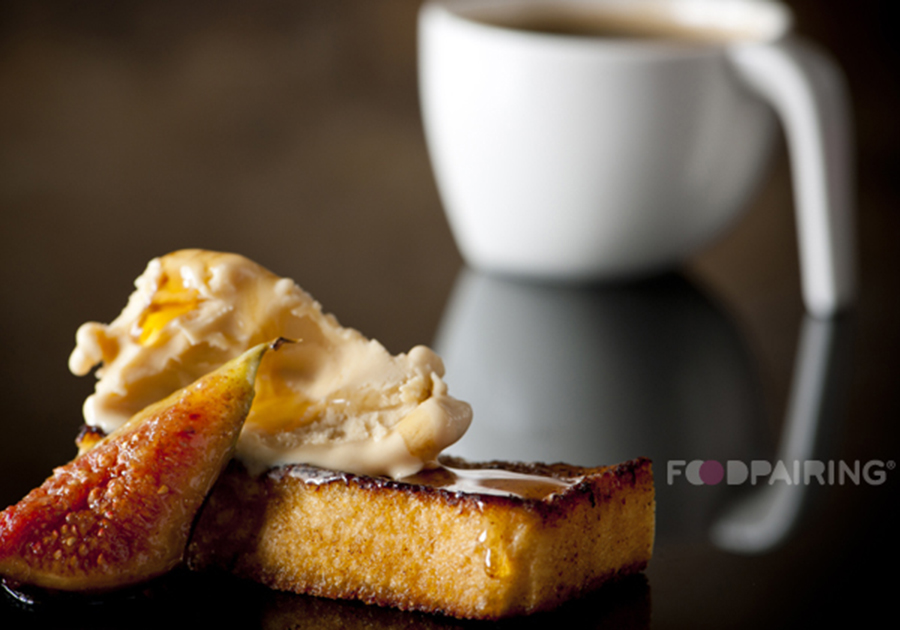
フードペアリング - FNC コロンビアコーヒー生産者連合会
cafedecolombia.jpJapanese Sweets (和菓子, wagashi)
Japanese sweets carry less fat than Western pastries, which means the bean paste (anko) and sugar sweetness come through directly and unmediated. That's precisely why acidity handling is decisive. For dorayaki (sweet red bean pancakes) or yokan (firm red bean jelly), medium and above is the foundation, with the aim being to support the sweetness of the filling without overwriting it. The idea isn't to clash aromas but to let the sweetness stand while providing something to lean on.
Dorayaki brings a honeyed quality from the pancake batter alongside the round sweetness of the bean filling — two layers of sweetness. For a milder dorayaki, medium roast is sufficient; nut or caramel notes in a pour-over let the baked surface lift gently without interference. For a sweeter dorayaki with chunky red bean (tsubu-an) or a butter-filled version, stepping toward medium-dark gives more assurance. In that territory, the bitterness gently tightens the sweetness rather than dissolving into it — harmony shading slightly toward contrast. Push too far toward roasty-char though and the bean paste's fragrance retreats. Stopping at cacao or roasted nuts is about the right depth.
Yokan is denser, sweeter, and has almost no moisture — the finish lingers longer. A light roast acidity against yokan tends to leave the sweetness and the acid feeling separate and unresolved rather than combined. That's why darker is generally better here. Small-red-bean (ogura) yokan works well with medium-dark through dark; matcha yokan is well-served by medium-late with a touch of bitterness that echoes the green tea bitterness underneath the sweetness. Pour-over delivers cleaner edges; immersion brings out the sweetness and extends the body. A small piece of wagashi makes even the texture difference between methods perceptible.
Both dorayaki and yokan — despite their gentle reputations — need medium roast and up for stability. The bean paste sweetness feels mild but has real density; a thin cup simply doesn't meet it. As noted: pour-over for definition, immersion for sweetness and body. If you want to show off the dorayaki's soft, spongy texture, go pour-over; if you want to track the sticky finish of yokan, French Press is the better companion.
Light Snacks and Savory Toast
Not all afternoon snacks are sweet. Peanut butter toast, cheese toast, or a handful of nuts at your desk pivot the focus from sweetness to fat, salt, and roasted fragrance. For this category, medium-dark roast with body is the more reliable partner. The strategy is mostly harmony — aligning nuts, cacao, and roast character for unity.
Peanut butter toast shifts slightly depending on whether it's a sweet style or a salty style. For sweeter peanut butter, medium-to-medium-dark with the nutty character of the coffee echoing the peanut works well. For a saltier version, a little extra bitterness as contrast gives the finish some definition. French Press fits naturally here — a full-bodied cup with good oil content meets a fat-forward spread, and the coffee doesn't feel watery against the peanut butter.
Cheese toast follows the same logic. The milkfat in melted cheese needs the round bitterness and texture of a medium-dark roast. A pour-over highlights the toasty char and gives the cup some sharpness; a French Press matches texture to texture, letting the cheese's richness relax into the cup's body. If you want to cut through the saltiness, pour-over; if you want a seamless softness, go immersion. Unlike sweet snacks, this is a context where body absorbing the richness beats acidity clearing it.
With nuts — even in small quantities — the aromatic density is high enough that the roast can be pushed without losing balance. Plain roasted almonds or walnuts: medium roast. Caramelized nuts or honey-roasted varieties: medium-dark. Raw-roasted nuts call for aromatic harmony; sweetened nuts call for a touch of bitterness as counterpoint to keep the palate from fatiguing. Pour-over sharpens the nut character; immersion adds a round, oily softness. For savory snacks, "definition or texture?" is the first question — the answer shapes the entire cup.
💡 Tip
For an uncertain afternoon snack pairing: lightly sweet items work with medium roast in harmony; strongly sweet items work better with medium-dark and above, adding a touch of contrast. Pour-over keeps the texture and char crisp; immersion expands the sweetness and body. Match your tool to your target.
Dessert Pairings: Custard Pudding, Cake, and Ice Cream
For after-dinner desserts, it helps to think beyond just sweetness level — egg and dairy richness, fruit acidity, and whether the dessert is cold all deserve attention. Harmony and contrast are still the operating principles, but dessert adds texture matching as a third dimension. Unlike baked goods, pudding and ice cream lead with mouthfeel; the same medium roast will land differently depending on whether you brew it as a pour-over, a café au lait, or add milk.
Custard Pudding (プリン, Purin)
Japanese-style custard pudding (purin) — a close cousin to crème caramel — centers on egg and dairy sweetness, with caramel bitterness as the foundation beneath. For that two-layer structure, medium through dark roast is the basic frame. Leaning toward the egg and milk? A medium roast's nutty-caramel notes. Leaning into the caramel bitterness? A dark roast's cacao quality.
I've tested this many times with homemade purin. A medium-roast café au lait matched to a glass of purin creates a flow from the pudding's soft sweetness through the milk's gentleness, with a long vanilla note in the finish. Switching to a straight dark roast pour-over brings the caramel layer forward — the bitterness becomes the frame around the pudding, and the surface caramel's outline sharpens. The same dessert, two different featured elements.
For extraction: pour-over gives definition; café au lait gives texture continuity. A firm, old-school egg-heavy purin (the type that stands up on its own) matches medium-dark drip; a silky, gently sweet homemade version works beautifully with a medium-roast café au lait. The coffee in this case isn't "adding sweetness" — it's building a connection between the sweetnesses already present.
Cheesecake
Cheesecake changes with format — baked versus no-bake, with or without berry topping. The base is medium roast, where nut, caramel, and mild roast character complement the cream cheese's richness. Baked cheesecake has some of its own browning, so a straightforward medium-roast pour-over is the clean, reliable pairing.
Add a berry sauce — blueberries, raspberries — and the window opens toward the lighter end of light-to-medium. Here, the fruit's acidity echoes the topping and lifts the heaviness of the cheese. No-bake cheesecake, cold with its own acidity, risks a collision between the lactic tang and coffee bitterness if you go dark — the aromatics tend to flatten. A clear, bright pour-over keeps the three-dimensional quality of the combination intact.
If you want to soften and connect the saltiness and milkfat of the cheese, a small addition of milk is an option. Be careful not to overdo it — too much milk can muddy the cheesecake's own richness and round off the distinction between the two. With a cheese-forward dessert, start straight with medium roast as the reference and adjust from there.
Chocolate Cake (Gateau au Chocolat)
Dark chocolate cake wants dark roast. The density of chocolate sweetness and cacao bitterness, combined with the roast and intensity of dark coffee or espresso, creates a tight, satisfying unity.
For a particularly fudgy center or a flour-heavy version with a low center of gravity, espresso is the more natural partner. Standard espresso extracts a small, concentrated volume quickly, so it matches the intensity of a single bite of rich chocolate without flinching. A straight dark-roast drip works too, but the espresso's shorter, denser volume tracks the cake's density more naturally.
Contrast is also a real option here. A light roast with berry-like acidity can work against dark chocolate in the way a raspberry sauce would alongside it — providing lift and a bit of exit from the richness. Treat it as the alternative rather than the default: dark roast is the foundation, light roast is the variation.
Fruit Pie
Fruit-forward light-to-medium roast is the center for fruit pies. When the dessert features apple, berries, apricot, or peach as the star, the coffee needs its own bright acidity and transparency to match. A dark roast here pushes the roast character in front of the fruit, and the filling disappears into the background.
Clear pour-over is the extraction of choice. Keeping the liquid free of excessive cloudiness or weight lets the edges of the dessert stay distinct and legible. For apple pie, shift slightly toward medium roast to connect with the cinnamon and baked color; for berry pie, stay on the lighter side and let the red fruit aromatics breathe.
The goal isn't for coffee acidity and fruit acidity to simply both be present — the direction of the aromatics needs to align. The FNC pairing framework also draws attention to aromatic commonality. For fruit pies this is especially effective: choosing a bean with citrus or berry character pulls the fruit's aromatics a full register brighter.
Ice Cream
Ice cream's challenge isn't just the sweetness — cold temperatures dull the palate, which means the coffee needs clear, defined character to register. Dark roast or espresso, with bitterness and body as anchors, holds the shape of the pairing where a lighter cup might dissolve into the sweetness and cold.
Vanilla ice cream is the classic dark roast match, with roasted nuts and cacao character working naturally. Chocolate ice cream can take even darker; caramel ice cream also takes bitterness well. Fruit sherbets and berry ice cream technically open a lane for lighter, fruit-forward coffee — but at that point the pairing is drifting toward tea territory rather than coffee. If you're keeping it as a coffee pairing, vanilla and dairy-based ice creams with dark roast remain the most coherent combination.
For extraction, a straight drip works, but espresso makes better use of the temperature differential. The small, concentrated volume has more aromatic intensity per drop, and when it hits a cold surface the lift of steam and aroma is immediate and rich. With sweet desserts where the goal is to tighten the center, keeping the liquid volume small is better for overall coherence.
Affogato
Affogato — hot espresso poured over vanilla ice cream — is the pairing that starts as one thing and finishes as another. The recipe varies, but for one serving, 30 mL of espresso is a practical reference point that balances intensity against the temperature differential. Espresso's short, high-concentration extraction gives it the aromatic spine and bitterness needed to hold its shape against something cold and sweet.
The key is choosing a dark-leaning bean that contributes cacao and roast character. When the espresso hits the ice cream, the surface melts immediately into a sauce while the core stays cold — one serving contains both a temperature gradient and a concentration gradient. That double structure is the point of an affogato; a drip coffee can substitute, but the espresso's aromatic core doesn't waver the same way.
Resist mixing everything immediately. Eating the half-melted outer layer first before working your way into the cold center lets the bitterness, sweetness, and temperature change register as separate layers before they integrate. Affogato sits at the boundary between dessert and beverage — rather than thinking of it as coffee accompanying a dessert, it's easier to understand as a pairing designed from the beginning as a single unified thing.
When to Use Milk
With desserts, how and when you introduce milk deserves its own attention. Café au lait — drip coffee with milk, typically around 1:1 — rounds the texture while preserving some definition. That roundness pairs naturally with egg-and-dairy desserts like custard pudding, milky ice cream, and soft baked cheesecake. For a purin-style dessert, the classic balance of roughly equal coffee and milk creates a bridge between the cup's character and the egg-and-dairy sweetness that already lives in the dessert.
Espresso-based milk drinks work differently. A cappuccino's foam lifts the aromatics, making it suited to a lighter cheesecake or a well-browned tart. A macchiato, with just a small amount of milk, keeps enough of the coffee's core intact to stand up next to gateau au chocolat's density. Think of adding milk not as "reducing bitterness" but as "building a texture bridge" — that framing makes the choices intuitive.
A summary by dessert:
| Dessert | Recommended roast | Flavor direction | Brewing method | Milk |
|---|---|---|---|---|
| Custard pudding (purin) | Medium–dark | Nuts, caramel, cacao, caramel | Pour-over drip, café au lait | Works well |
| Cheesecake | Medium; light–medium with berries | Nuts, caramel, gentle fruit | Pour-over drip | Skip by default; small amount OK |
| Chocolate cake (gateau au chocolat) | Dark; light for contrast | Cacao, roasted nuts, berry acidity | Espresso, dark-roast drip | Skip by default |
| Fruit pie | Light–medium | Citrus, berries, bright fruit | Clear pour-over | Skip |
| Ice cream | Dark | Cacao, bitterness, full body | Espresso, concentrated drip | Skip by default |
| Affogato | Dark | Cacao, roast, concentration | Espresso | Skip |
ℹ️ Note
A useful grouping: dairy and egg desserts — connect texture with milk. Fruit desserts — brew straight to let the aromatics lift. Chocolate and ice cream — use dark roast or espresso to tighten the outline. Three categories, three approaches, and the after-dinner cup organizes itself.
Quick Reference Table
This section is essentially the cheat sheet I've written out and stuck to my fridge door and the inside of the snack tin lid — reorganized for the article into three decision tiers. Start with what's for breakfast: bread or rice and miso soup. Then open the tin: baked goods or wagashi? Just those first questions, then move to sweetness, fat, and finally aroma profile — and you're almost never stuck. The theory matters, but at the actual table a five-second decision is the goal.
| Food type | Recommended roast | Flavor direction | Brewing method | Harmony / contrast note |
|---|---|---|---|---|
| Japanese breakfast | Light–medium | Citrus, white flowers, gentle sweetness, light nuttiness | HARIO V60; French Press when you want more roundness | Harmony: meet the dashi's quiet umami. Contrast: use light acidity to cleanse the palate |
| Western breakfast | Medium–dark | Nuts, caramel, cacao, round body | HARIO V60; French Press for eggs and bacon | Harmony: match the bread char and butter. Contrast: fruit notes to lighten the finish |
| Chinese breakfast | Light–medium-dark | Citrus and herbs for lighter; nuts and cacao for savory | HARIO V60; French Press for meat dim sum; Chemex for clarity | Harmony: connect with sesame oil and fragrant wrappers. Contrast: acidity to cut through oils |
| Baked goods | Medium | Nuts, caramel, cinnamon, toasty sweetness | HARIO V60; French Press for more body | Harmony: layer baked char and butter. Contrast: light fruit notes to tighten sweetness |
| Japanese sweets (wagashi) | Light–medium | Citrus, grain-like earthiness, gentle sweetness, light roast fragrance | HARIO V60; French Press for roundness | Harmony: meet the bean paste's earthiness. Contrast: bright notes to break monotony |
| Custard pudding (purin) | Medium–dark | Caramel, cacao, milky sweetness connection | Pour-over drip, café au lait | Harmony: match the egg-and-dairy roundness. Contrast: pick up the caramel bitterness for definition |
| Fruit pie | Light–medium | Citrus, berries, bright fruit | Clear pour-over, Chemex | Harmony: layer the fruit's acidity. Contrast: medium roast sweetness to anchor the acid |
| Cheesecake | Medium; light–medium with fruit topping | Nuts, caramel, gentle fruit | Pour-over drip | Harmony: connect to dairy smoothness. Contrast: berry acidity to lift the finish |
| Chocolate cake (gateau au chocolat) | Dark; light for contrast | Cacao, roasted nuts, or red fruit | Espresso, dark-roast drip | Harmony: deepen the chocolate density. Contrast: fruit notes to create an escape route from the richness |
| Ice cream | Dark | Cacao, bitterness, full body | Espresso, concentrated drip | Harmony: show the milk sweetness as more concentrated. Contrast: bitterness to tighten the cold sweetness |
The table works on its own, but when two answers feel equally valid, three steps narrow it down quickly — this is the actual order I run through it:
- How sweet is it?
Lightly sweet — yogurt, gentle wagashi — and light-to-medium's brightness works. Strongly sweet — pudding, chocolate, ice cream — and medium-to-dark holds the balance without tipping over.
- How much fat is involved?
Butter, eggs, dairy, cream, fried elements — the cup needs body to match. Medium roast and above, or a French Press or espresso-style extraction that foregrounds richness. The inverse: a dashi-centered Japanese breakfast or a fruit-forward light dessert, where clear pour-over lets the transparency do the work.
- Match the aromatics or diverge?
Nuts, caramel, cacao, and baked-char flavors — medium-to-dark as the axis. Citrus, berries, floral notes — light-to-medium lines up cleanly. Then ask about texture: for custard, milky ice cream, or soft baked cheesecake, a café au lait bridges the gap. For ice cream or gateau au chocolat where you want a sharp finish, espresso.
💡 Tip
[!WARNING]
At the real table, the theory often yields two equally valid answers rather than one clear winner. Croissant: you can go medium roast HARIO V60 for aromatic harmony with the crust and butter, or a lighter bean through Chemex to let the butter's finish feel lighter. Daifuku (Japanese mochi filled with sweet bean paste): a light roast creates space around the sweetness of the filling, while a medium roast brings a settled grain quality that complements it. Both work. The table is a map for finding those intersections — once you start using it daily, it becomes second nature.
Home Brewing: A Basic Recipe and Reliable Adjustments
The One-Cup Starting Point
Having a fixed reference recipe makes it much easier to move the cup toward a specific food pairing when needed. My home pour-over starting point: 15 g of beans (medium grind — roughly the texture of granulated sugar), 240 mL of water, 92°C, 30-second bloom, total time around 3 minutes 30 seconds (roughly a 1:16 ratio). These are drawn from my own experience and follow generally accepted home brewing ranges — there is no single official HARIO recipe, so use this as a point of departure rather than a prescription.
The process doesn't need to be complicated. Rinse the filter with hot water, dose in 15 g of grounds and level them gently, pour just enough water to saturate the grounds and bloom for 30 seconds, then pour in stages to reach 240 mL, finishing the draw-down within about 3 minutes 30 seconds total. Within that frame, a nutty medium roast will show its sweetness clearly, a light roast will keep its fruit character from scattering, and a dark roast won't turn heavy and flat.
A few general reference points worth keeping in mind: extraction temperature range 85–96°C; coffee-to-water ratio 1:15–1:17. Light roasts, which give up their compounds more reluctantly, often benefit from going 1–2°C higher — aromatics open up. Dark roasts, where bitterness comes forward early, benefit from going 1–2°C lower to keep the char from dominating. The interesting thing is how much 4°C of difference can change the cup. I've done the same recipe side-by-side at 90°C and 94°C repeatedly: at 90°C, the sweetness comes forward and the finish rounds off; at 94°C, the acidity steps up and the aromatics have more lift at the start. The numbers are close; the cups are noticeably different.
⚠️ Warning
Change only one variable at a time — out of beans, water volume, and time, start with water temperature. A single change is traceable; three changes at once leave you with nothing to learn from. Once temperature is dialed, move to grind size.
If you're brewing this as a morning cup, it's worth repeating that a slightly slower morning — waiting until the food is ready before pulling the first pour — generally makes for a better-integrated experience than rushing the coffee before the meal.
Diagnosing and Adjusting Common Flavor Problems
The path to consistency at home is learning to see a failed cup not as "bad beans" but as a specific, fixable direction problem. Almost every flavor complaint falls into one of four categories: too sour, too bitter, too weak, too strong.
Too sour means under-extraction — the structural core is present but sweetness and body haven't caught up. The fix sequence: grind finer, extend extraction time. Some guides suggest lowering water temperature for sourness, but I find that drops the overall aromatic energy too — I prefer grind size and time first, then fine-tune temperature. With a light roast where the acidity feels sharp, moving just one notch finer on the grinder and letting the drawdown run a bit past 3 minutes 30 seconds can shift "sour" to "sweet-tart" — which is usually what you were looking for.
Too bitter means over-extraction — the palate is receiving too much. If you feel bitterness sitting at the back of the tongue and the finish feels dry and astringent, the sequence is: lower temperature, grind coarser, shorten time. For a dark roast at 92°C that's tipping heavy, dropping to 90–91°C keeps the cacao while pushing the char-like notes to the background. Again: change one thing at a time so you know what actually worked.
Too weak means insufficient concentration. The most direct fix: increase bean dose. Starting at 15 g, adding a little with the same water volume brings the outline back without disrupting the flavor direction. Alternatively, grinding finer increases both concentration and extraction depth — useful when you want to also pull more sweetness forward. For a cup that feels thin next to eggs and toast, adjusting dose first tends to be less disruptive to flavor character than other changes.
Too strong is the inverse: reduce dose or increase water volume. More water lightens the mouthfeel; less beans shortens the overall finish. For heavy breakfast foods, the first approach tends to fit; for lighter snacks, the second is often cleaner.
A single-glance troubleshooting guide:
| Problem | What's happening | Variable to touch | Direction |
|---|---|---|---|
| Too sour | Under-extraction | Grind / time / temperature | Finer, longer, lower temp |
| Too bitter | Over-extraction | Temperature / grind / time | Lower, coarser, shorter |
| Too weak | Insufficient concentration | Bean dose / grind | More beans, finer grind |
| Too strong | Excess concentration | Bean dose / water volume | Less beans, more water |
In practice, compound problems show up: "sour and thin," "bitter but lacking body." When that happens, think of bean dose as controlling concentration and grind/time as controlling extraction depth — treat them as separate dials. When my morning cup goes sideways, I set the concentration first, then close in on extraction depth. That sequence keeps the correction from spiraling.
Chemex for Multiple Cups
When brewing for two or three people at once, the Chemex is a practical breakfast table choice. Its thick paper filter produces a clean, clear cup — when laid out alongside yogurt, fruit, and light baked goods, it doesn't collide with the food. For multiple cups, the target parameters are 1:15–1:16 ratio, about 93°C, 4–5 minutes total. The longer contact time actually helps maintain the cup's structure as the volume increases.
For a 2–3 cup batch, keeping the ratio within that range and giving the bloom extra attention is usually enough to land a transparent, clean result. The Chemex flows more slowly than a HARIO V60 — if you grind as fine as you would for the V60, the filter will clog and extraction will push past 5 minutes into bitterness. When a multi-cup Chemex brew comes out slightly astringent, coarsening the grind to restore flow rate tends to produce a cleaner result than simply lowering the temperature.
My practice when brewing two or more cups for breakfast: rather than mechanically doubling the single-cup recipe, I open the grind slightly to match the Chemex's flow rate. That reduces cup-to-cup variation — the first cup doesn't come out stronger, the last cup doesn't come out heavier. Because the Chemex preserves the clarity of the brew, light roasts keep their floral and citrus character clean, and medium roasts hold their caramel sweetness without going muddy. A reliable tool when you need the flavor direction to be legible for everyone at the table.
Wrapping Up
For breakfast, match roast level to the intensity of Japanese, Western, or Chinese food. For snacks, let sweetness be the guide. For desserts, let the classic pairing archetypes and the milk question settle the cup. Start tomorrow morning: check the quick-reference table, pick your roast based on what's on the plate, and then try the same food with both a light and a medium roast side by side. Over time, I found that my own shorthand emerged naturally — medium for butter, light for berry sweets — and the choice became intuitive even when eating out. Bean prices have climbed recently with some producers announcing increases, but for a daily practice that holds up, rotating in accessible origins like Brazil is a sensible strategy. On the health side, effects vary with the full context of your diet and lifestyle, so rather than prescribing anything, just keep a one-line note of what tasted right. That record becomes your best pairing guide.
Related Articles
Tasting, Cupping, and Omakase Coffee Courses: What's the Difference and How to Choose
Coffee experience events often list tasting sessions, cupping classes, and guided 'omakase-style' courses — and while they may sound similar, each one serves a distinct purpose. Tasting is about observing flavor, cupping is a standardized method for comparing quality, and omakase-style courses are designed so discovery happens without the guesswork.
Arabica vs Robusta: A Side-by-Side Comparison of Flavor and Price
Arabica and Robusta often get lumped together as 'coffee beans,' but the aroma, acidity, bitterness, body, and even the caffeine kick in your cup are strikingly different. If you want layered aromatics in a black cup, Arabica is the natural starting point. For lattes and espresso where you need thickness, crema, and punch, Robusta or an Arabica-Robusta blend is a dependable choice.
Light Roast vs. Dark Roast: 5 Flavor Elements and Water Temperature
Light roasts bring out fruit-forward acidity and delicate florals, while dark roasts push bitterness, toasty warmth, and a heavier body to the front. Change nothing but the roast level, and the same bean will taste like an entirely different coffee.
How Grind Size Changes Your Coffee: A V60, French Press, and Espresso Reference
When your coffee tastes inconsistent, the first thing to revisit is not the beans but your grind size. A shift in particle size changes both extraction speed and surface area, which determines whether acidity leads, sweetness lands, or bitterness and astringency dominate the cup.