
Hario V60 Characteristics and Brewing Method | Why It's Popular and Basic Recipe
Hario V60 Characteristics and Brewing Method | Why It's Popular and Basic Recipe
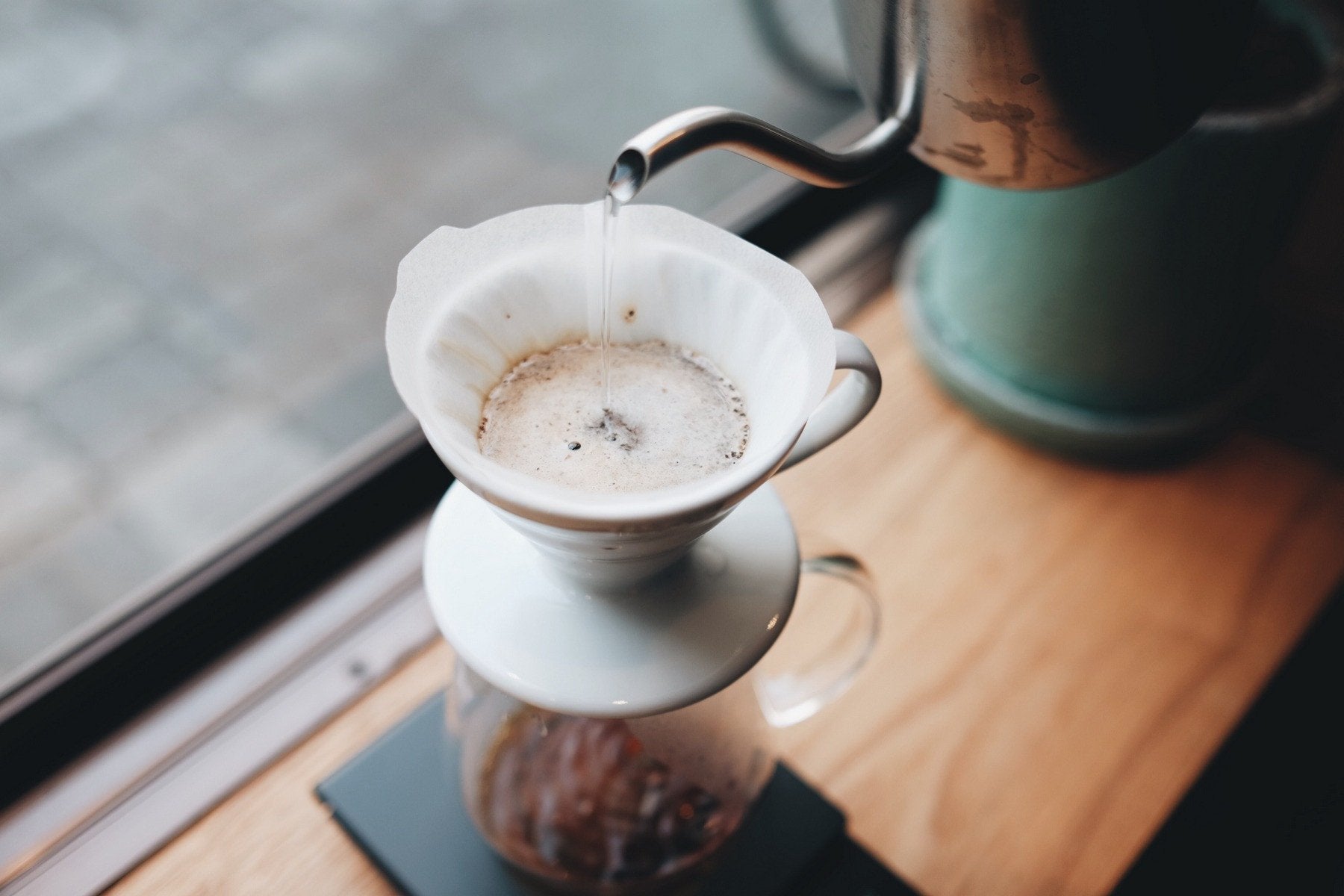
The Hario V60 remains a standard in Japan because its conical shape, single large hole, and spiral ribs transform the pouring method itself into flavor creation. The flexibility to brew either light and delicate or thick and sweet flavors makes it beloved in both home kitchens and professional coffee shops.
The Hario V60 has remained a standard for so long because its conical shape, single large hole, and spiral ribs transform the pouring method itself into flavor creation. The flexibility to brew it light and delicate or thick and sweet is a major appeal supported in both home kitchens and professional settings.
On the other hand, a tool that lets you create freely tends to produce inconsistencies just as easily. Even while brewing V60 every morning myself, I've noticed that with the same beans, just a slight change in pouring speed or position sometimes brings forward acidity one day, while on another day sweetness and richness connect beautifully.
This article is designed for both those new to V60 and those struggling with inconsistent flavor, walking through the reasons for its popularity, its structure, basic recipe, tips for consistency, troubleshooting adjustments, and differences from Kalita Wave and V60 MUGEN in order. By the time you finish reading, you should see a clear path to recreating your ideal cup starting today.
Why Is Hario V60 Popular? Key Takeaways First
The bottom line is that Hario V60 is popular because the elements that determine flavor are clearly expressed in the dripper's structure. There are four core points. The conical shape deepens the coffee bed layer, making water flow naturally toward the center. The single large hole means pouring speed directly translates to extraction speed and flavor. The spiral ribs create space between the paper and walls, making it easier to release gases during bloom. Furthermore, as outlined in "The World of V60 | Hario Official," through a long history of use by both professionals and home brewers, thick layers of recipe knowledge and reproduction expertise have accumulated.
With these four elements together, V60 becomes more than just a standard tool. With light roasts, it's easy to extend bright acidity; with the same beans, slowing the pour slightly makes it easy to create thick sweetness. In other words, rather than the tool itself fixing the flavor, the dripper's design makes it easy for the brewer's intention to be reflected directly in the cup. The reason it's often discussed in world championship contexts is that this high degree of freedom and the shareability of extraction theory it generates is significant, in my view.
V60 is certainly worth recommending to beginners too. It's not a tool that's too difficult to handle. However, the "high freedom" that makes it popular also translates directly to difficulty in reproducibility. The quickest approach at first is to keep the recipe unchanged, fix the bloom and total water amount, then maintain a consistent pouring tempo alone. For example, once you decide on coffee amount, water amount, and bloom time, pour in the same rhythm each time at first. This alone can greatly stabilize V60's "inconsistency." While it's a tool you can play with freely, reproducibility improves faster with a fixed recipe at the start.
The balance of availability and price is also a strong reason for its standard status. The Hario official online store offers the V60 transparent dripper 02 plastic model at ¥660, and the heat-resistant glass transparent dripper 02 at ¥2,200 (tax included), making it easy to choose between different materials at accessible price points. Paper filters also have high circulation; the Hario official V60 paper filter 02M 50-pack is listed at ¥220 (tax included) (prices as of writing from Hario's official online store; please verify the latest price on the official website before publishing). Because both the tool itself and consumables are easy to obtain, it's a major appeal that you can start as soon as you think "I want to try this."
I clearly felt V60's flexibility when I brewed a light roast Ethiopian on a day off. Without changing the recipe itself, simply slowing the pour slightly, the citrus acidity that initially stood forward gave way to a mature berry-like sweetness. With just the slightest pouring difference, the bloom character and finish texture change. At that moment, I realized the reason V60 is long-supported is not "because it's famous" but because you can create a different expression in each cup yourself.
V60's Three Characteristics: Conical Shape, Single Large Hole, Spiral Ribs
The shortcut to understanding V60 is to connect the visible differences directly to "flavor movement." As Hario outlines in "The World of V60 | Hario Official," the three core structures are conical shape, single large hole, and spiral ribs. The name "V60" itself comes from the V shape of the cone and its 60-degree angle. None are decorative—all directly relate to extraction speed, powder bloom, and how compounds extract.
The conical shape deepens the powder layer, making flavor dynamic
The V60's conical shape first takes effect by deepening the coffee bed layer. Compared to flat-bottomed drippers, hot water concentrates more toward the center, passing vertically through the coffee grounds. This makes it easier to extract compounds, and where you pour and how fast you pour becomes clearly expressed in the flavor.
I sometimes compare the same beans at the same water temperature by changing only the pouring tempo, and from my experience, pouring each section in around 10–12 seconds often feels light and tea-like, while taking 20–25 seconds usually brings out cocoa-like texture and sweetness (this is purely from my experience and varies by bean and roast level).
The single large hole delegates flow speed to the brewer
V60's bottom is a single large hole. This is a major difference from drippers with small multiple holes—the tool doesn't strongly lock extraction speed from the dripper side. How fast the water falls depends considerably on the pouring itself. In other words, flow speed depends more on the brewer than the dripper.
With this single-hole design, pouring quickly makes water drain easily, tending toward a light, clean direction. Pouring slowly lengthens contact time with the bed, tending toward a more robust extraction. This is where the wide flavor adjustment range comes from. While expert cafe blogs like "Hario V60 Dripper Basic Brewing Method" treat V60 as a tool where pouring speed changes flavor, actually using it gives more the sense of "flavor I create" than "flavor the tool decides." That's why when you have a clear intention, it's powerful; conversely, if your pour wavers each time, the flavor wavers too.
【The King of Drip Brewing】Hario V60 Dripper Basic Brewing Method and Yamakawa-style Arrangements
Yamakawa Coffee Shop, Nagano City, Nagano Prefecture
yamatokawa.comSpiral ribs support bloom expansion
The spiral grooves inside, the spiral ribs, shouldn't be overlooked. The ribs create a slight space between the paper filter and the dripper wall, creating an air passage. This works significantly during bloom. Gas from the coffee grounds escapes more easily, and the powder bed blooms readily. Water doesn't get trapped and suffocate, so aroma releases more easily and extraction starts smoothly.
When the powder visibly puffs up during bloom and then settles naturally, the ribs are working properly. Conversely, a flat-wall design tends to stick the filter against the walls, with little gas escape, leading to sluggish flow that often translates to heavy or murky flavor. V60 is valued for how clearly the aroma develops precisely because this air passage is designed into the structure.
💡 Tip
When flavor is hard to read with V60, returning to the role of each structural element makes it easy to organize. The conical shape makes compound extraction easier, the single large hole reflects pouring speed in flavor, and the spiral ribs support bloom and air release. Just keeping these three points in mind makes it easier to see what to adjust.
The three characteristics work together, not separately. The conical shape deepens the powder layer, the single hole gives freedom in flow speed, and the spiral ribs organize the bloom condition. This combination is what lets V60 shift toward both lightness and sweetness. Few drippers make the structure-flavor relationship this clear.
Why V60 Is Used Worldwide
Brand Foundation
Behind V60's widespread use lies not just the tool's perfection but also the accumulated heritage of the Hario brand. As outlined in "The World of V60 | Hario Official," Hario was founded in 1921. Furthermore, in 1980 they released the "Coffee Fanatic Era" dripper, regarded as the origin of conical drippers, making V60 not a suddenly novel tool but a continuation of extraction philosophy refined over time.
Knowing this history makes it easier to understand why V60 became standard. The conical shape, single large hole, and idea of creating flavor through pouring are not mere design features but rather Hario's long-pursued "enjoyment of controlling extraction" honed for the modern era. I sense V60's strength here. It's not a novelty product that gains attention then fades, but rather a standard tool refined by a heritage brand into a form actually used in the field.
Its spread is also boosted by this trust. Hario is said to export to over 80 countries worldwide according to third-party information, so it's not just a domestic standard. From overseas roasters to championship baristas to home coffee enthusiasts, they share recipes based on the same V60, creating an environment where this is easy. Beyond just the tool itself, the Hario official online store continuously carries plastic and glass models, and V60 paper filter 02M circulates through official channels, establishing a foundation where you can easily assemble the tool and consumables.
Actually, I find that even when following overseas roaster recipes, V60 rarely disappoints. Of course fine adjustments are needed based on beans and roast level, but because tool and filter availability is high and knowledge is shared globally, it's easy to align starting points. This "foundation strength" converts high adoption rates directly into high reproducibility. It's not common for a dripper to do this. When considering V60 in the context of overall dripper selection, it's also easy to understand why V60 functions as a reference tool.
The reason V60 is supported by world baristas includes the proximity between competition and daily use. Tools used in championships are directly available at prices and with distribution that work for home use. Recipes assembled in professional settings cascade to homes, and home innovations are shared again through social media and videos. Not many tools have this circulation. V60 is simultaneously a "high-freedom tool" and a "knowledge-rich tool."
Speaking of V60 in world championship contexts, Satoshi Kasuya's 4:6 Method is unavoidable. This approach using V60 clearly articulates the idea of building flavor direction with first-half pouring and concentration with second-half pouring, significantly influencing home extraction too. By framing extraction not as "somehow skillfully done" but as flavor and strength designed separately, I believe it pushed V60's adoption one step further.
Personally, once I encountered the 4:6 Method's thinking, V60 stopped being purely intuitive. For example, I now decide first whether I want sweetness or bright acidity forward, then adjust concentration afterward. V60 has high freedom, which some say makes it difficult, but the 4:6 Method gave design blueprints to that freedom. With competition-refined theory reaching homes, V60 shifted from "a professional tool" to "a learner's tool."
"PHILOCOFFEA 4:6 Method" is clearest for organizing thinking, and Rentio PRESS helps with understanding spread by covering export country numbers. The historical starting point is organized in Hario's official V60 series introduction, and with brand continuity and global reach overlaid with shared language like the 4:6 Method, V60 naturally reads as a world-standard extraction platform rather than just a popular tool.
The World of V60
Hario Heat-Resistant Glass
www.hario.comFor Beginners: V60 Basic Recipe
Recipe Numbers
Start with one cup fixed at 13g beans, 200g water, 91°C temperature for clarity. Grind size is medium (like granulated sugar), bloom is about 30g for 30 seconds, and total extraction time is 2 minutes 15 seconds to 2 minutes 30 seconds as a guideline. Because V60 has high pouring flexibility, changing too many conditions from the start makes flavor causes hard to track. Having this fixed point first makes it easier to judge whether acidity is strong or bitterness is heavy.
These numbers heavily overlap where Hario-derived basic values organize with every coffee's single-cup guideline, and the practical recipe from "Kurasu's Hario V60 Extraction Recipe." Hario's approach uses 10–12g beans per 120ml cup, 30-second bloom, water around 93°C, and within 3 minutes as basics. Meanwhile, Kurasu designs 13g:200g, 90–91°C, about 2 minutes total, organizing into home-reproducible balance. I often land at 13g/200g/91°C, around 2 minutes 20 seconds as standard, splitting the difference. This arrival point easily shows bright acidity and sweetness coexisting, making it easy to grasp flavor contours even with new beans.
Bean selection shifts the appearance slightly. Light roasts more easily show bright acidity and aroma; dark roasts more easily show bitterness and body, so roast level differences directly connect to how you receive flavor. Understanding roast level is organized well in coffee bean roast level selection guides and content comparing light and dark roasts, making the meaning of this basic recipe clearer.
Kurasu's Hario V60 Extraction Recipe
The Hario V60 can be extracted many ways through pouring technique, beloved among coffee enthusiasts for a long time. This dripper, where you enjoy various changes through pouring alone, works like a mirror reflecting the brewer, endlessly delighting us, while simultaneously presenting challenges when using it. This article explains the Hario V60 extraction method in detail
jp.kurasu.kyotoStep by Step
The process is simple, but with V60 each movement affects flavor. First, set the paper filter and rinse with hot water, suppressing paper smell while warming the dripper and server. Discard the rinse water, add 13g ground beans, then gently shake the dripper to level the bed. This level surface becomes the foundation for later pouring stability.
For bloom, imagine drawing a small circle from center and pour about 30g, waiting 30 seconds. Pouring vigorously tends to gouge locally, so pouring thin and quietly is key. When the powder fully blooms and the surface settles, proceed to main extraction.
Then split into 2–3 pours centered on center, maintaining steady speed while pouring to 200g total. Frequently following the rim thinly is less stable than centering, and flavor gathers better. Don't fully drain each pour; leaving liquid surface slightly makes extraction less likely to break. Your target total extraction time is 2 minutes 15 seconds to 2 minutes 30 seconds.
💡 Tip
Maintaining steady pouring speed stabilizes flavor more than precise volume. Even just pouring with a fine stream quietly and continuously reduces V60's inconsistency significantly.
When I open new beans, I first brew one cup using this fixed recipe. When 13g/200g/91°C lands around 2 minutes 20 seconds, how acidity stands, sweetness lingers, and finish length become visible, making it easy to judge whether to adjust grind or time next. Moving with just sensation is harder than having a single reference point; V60 becomes much more manageable.
Finishing Touches
With V60's basic recipe, differences often appear in paper rinsing and judgment not to drain completely. Rinsing is unassuming but suppresses paper smell and smooths extraction start. It particularly eases first pour entry and reduces bloom unevenness.
Another important awareness is removing the dripper before it fully drains. Waiting until fine drips fall into the server draws bitterness and heavy aftertaste. When the liquid level drops and extraction obviously slows, removing it tilts toward a clean, sweetness-retaining cup. Because V60's single hole makes flow straightforward, this late-stage cut-off clearly reflects in flavor.
This basic form excels as "fixed-point observation" against being swayed by tool freedom. Especially when starting, changing beans, water, and timing every brew makes it harder to track differences—adjusting conditions systematically first cups builds faster improvement. From my sense too, this recipe is a subtly perfect landing where lightness doesn't sacrifice sweetness. Feeling V60's clean extraction while sweetness doesn't disappear is a remarkably well-finished basic recipe.
Tips for Stabilizing Flavor in Brewing Method
Pouring Rhythm and Circle Size
V60 is often called difficult because of its high freedom. Conversely, knowing what to fix makes it immediately manageable. The most impactful is pouring speed. Maintaining steady flow matters more than precise volume; keeping a thin stream constant better suppresses flavor variation. Stable flow speed makes water passage through the bed more uniform, reducing days when only acidity spikes or only bitterness dominates.
Pouring position should focus on center. Using a smaller circle around the bed's middle keeps extraction control manageable. Reaching the rim edges every pour sends water toward filter sides, making compound extraction uneven. Especially with small single-cup powder amounts, this difference directly shows as flavor thinness or off-notes.
Not over-agitating the bed matters too. Vigorous pouring or oversized circles might seem robust but actually move too many fines. Fines collecting in lower layers dull flow, introducing bitterness and over-extraction flavor late. V60's single hole makes reaction straightforward, so agitation impacts reach the cup directly. I find that not keeping liquid level too high, letting the surface breathe gently, better preserves sweetness core.
💡 Tip
For stabilizing V60 flavor, the first thing to watch is pouring consistency over volume error. Just pouring thin, centered, steadily improves reproducibility significantly.
Size/Material/Filter Selection
Tool-side choices also reduce V60's difficulty considerably. Size-wise, 01 stabilizes more easily for single-cup brewing. While 01 is 1–2 cup and 02 is 1–4 cup design, brewing only one cup doesn't make larger sizes advantageous. Large-size single extractions easily shallow the bed layer, raising liquid level and intensifying agitation. When I brew one cup in 02 versus 01, the 02 tends slightly toward bitterness, while 01 cleaner. As practical sense, 02/03 often disadvantages one-cup brewing.
Material differences also affect extraction start. The Hario official online store lists V60 02 plastic at ¥660 and heat-resistant glass V60 02 (VDGR-02-B) at ¥2,200 (tax included). The price gap connects to practical feel beyond appearance. Plastic doesn't lose heat easily, giving quick extraction starts even for morning single cups. Conversely ceramic or glass, when preheated, shows gentler temperature settling, and flavor tends slightly toward stability. The difference isn't dramatic, but choosing between wanting to cleanly show light roast outline or smoothing dark roast edges offers room for selection.
Filters also matter. Hario originals tend to add body, while CAFEC's abaca leans lighter and cleaner—this tendency is carefully verified in articles like "THE COFFEESHOP's comparison piece." With the same beans, originals add slight roundness and density while abacu shows aftertaste withdrawn and aroma clarity. The same 02M 50-pack runs ¥220 from Hario official, so using originals as reference makes comparison easier.
Does Paper Filter Difference Change Coffee Flavor?
Hario V60・CAFEC Abaca Coffee Filter Comparison - THE COFFEESHOP
www.thecoffeeshop.jpRoast Level Water Temperature Guide
Water temperature is quite impactful for making V60's freedom an ally in flavor. The thinking is simple: higher for light roasts, lower for dark roasts makes targeting easier. The 4:6-based guideline from every coffee targets light roasts at 92–94°C, medium roasts at 88–92°C, dark roasts at 83–86°C. Using this as starting point makes it easier to match V60's "extractability" to roast level.
Light roasts need more energy to draw compounds, so higher water temperature suits. Temperature increase opens citrus acidity and floral aroma more easily, with sweetness core becoming visible. Too low tends thin without outline. Medium roasts have wide coverage; balancing sweetness/acidity/body in middle ranges rarely misses. Dark roasts benefit from slightly lower temperature. High heat exaggerates bitterness and harsh notes, making finish heavy. Starting around 83–86°C brings out chocolate-like sweetness and round body.
Dropping temperature just 2–3°C can soften same beans' texture, pulling away smokiness while preserving sweetness. V60 adjusting water temperature to roast level alongside pouring controls difficulty substantially.
Adjusting When Sour, Bitter, Thin, or Strong
Trouble-Specific Quick List
Because V60 offers high freedom, knowing which variables adjust which directions makes recovery straightforward. Rather than brushing off taste oddness vaguely, separating "sour, bitter, thin, or strong" makes fixes much faster. I first label flavor impression in one word, then decide whether to touch water temperature, grind, pouring speed, time, or bean amount.
When a morning cup tastes "too sour," it usually signals under-extraction. In those cases, raise water temp 2–3°C, make grind one notch finer, pour slightly slower or increase pours, extend total time 10–20 seconds tends to restore sweetness. I myself have warmed from 91°C to 93°C and extended time 15 seconds with same beans, and many times the flavor's core settled with just those changes. Impression from lemon-sharp shifts to yellow-peach roundness.
Conversely, bitter, heavy, harsh aftertaste signals over-extraction. Then lower water temp 2–3°C, make grind one notch coarser, pour slightly faster or reduce pours, remove dripper before fully draining works. V60's late-stage liquid carries bitterness and off-notes easily, so taking it before the last drops rather than extracting fully gives cleaner aftertaste. When dark roasts show prominent bitterness, slightly lower water temperature softens mouthfeel dramatically.
Thin, watery, aroma won't open signals under-concentration or extraction. Response is simple: add 1g beans, make grind finer, pour slower, extend time 10–20 seconds as basics. With small single-cup amounts, 1g differences directly show in density, and same beans' outline clarity shifts. When lacking sweetness with flat flavor, adding slightly more beans or time easily builds thickness without strain.
Strong, heavy, lingering on tongue is opposite direction: subtract 1g beans, make grind coarser, pour faster, reduce time 10–20 seconds for better flow. When concentration feels heavy, adding water to dilute risks density collapse unbalancing flavor. With V60, concentration adjustment works best fixing extraction conditions themselves rather than just adding water.
A quick reference table for immediate recall:
| Issue | Water Temp | Grind | Pouring | Time | Beans |
|---|---|---|---|---|---|
| Sour | +2–3°C | 1 notch finer | Slower, more pours | +10–20 sec | Same |
| Bitter | –2–3°C | 1 notch coarser | Faster, fewer pours | Shorter, remove early | Same |
| Thin | Same | Finer | Slower | +10–20 sec | +1g |
| Strong | Same | Coarser | Faster | –10–20 sec | –1g |
💡 Tip
When rushing recovery, starting with just water temperature or grind—one variable prevents confusion. Flavor change reads clearer and becomes fastest same-bean correction.
Adjust One Variable: How to Keep Verification Logs
The shortcut to fewer failures is adjustment order over instinct. V60 responds clearly, so moving temperature, grind, and pouring simultaneously makes it impossible to tell which worked. So it matters moving only one variable per brewing.
Once I set a base recipe, I change just one thing per cup. Say acidity was too sharp—I'll first raise water temperature alone. If still insufficient, the next cup I'll lengthen time slightly. This method builds personal maps: "this bean opens sweetly at 93°C," "this roast needs slightly finer grind." Coffee is a taste hobby, but during reproducibility-building, small comparisons are strongest.
Simple logging works well. Bean amount, water temperature, extraction time, grind size, finished weight are five essentials. Including finished weight shows how much actually dripped versus water poured, sharpening thin/strong judgment. Logs can be short—"13g / 91°C / medium / 2:20 / 180g / strong acidity" works in one line.
This logging becomes valuable with multi-day same-bean use. When day one was sour but day two suddenly bitter, logs make cause-tracking easy. Did I pour faster, extend time, or change temperature? Visibility makes sources clearer. Once logging starts, V60 shifts from "difficult tool" to "clearly responsive tool." Failure count doesn't drop so much as failure reasons become visible, which is more accurate.
V60's Weaknesses and Differences from Other Drippers
V60 vs Kalita Wave: Structure and Flavor Landing
V60's weakness in one phrase: flavor swings significantly with pouring. This reverses the strength. V60's single large hole means extraction shifts considerably by pouring speed, center versus rim, and pour count. While you can intentionally lift acidity or thicken sweetness, if you can't pour consistent tempo each time, flavor wavers too. The more free a tool, the more steady pouring and pour design matters.
Kalita Wave differs quite significantly here. As mentioned in CROWD ROASTER's comparison, Wave achieves flat-bottom-leaning shape with three holes, making extraction fall more stably than V60. Water doesn't drain excessively through one point; flavor landing gravitates toward middle-ground. Wave shows strength less for "I want to shift this way today," more for "I want to replicate yesterday's line today." The phrase "targeted neutrality" fits.
Flavor tendencies shift slightly too. V60 lets you swing outline sharply or round it depending on pouring, but Wave tends toward thickness and balance, with difficulty breaking wide. When starting extraction study wanting "consistent repeated flavor," Wave's stability holds real value. If wanting to fine-tune flavor presentation—acid visibility or finish length—by bean, V60 is more enjoyable.
Filter structure relating to flavor expression also matters, so reading internal guides on roast level and content comparing light and dark roasts alongside this helps organize understanding.
Dripper Showdown "Hario V60" VS "Kalita Wave"
CROWD ROASTER
crowdroaster.comV60 vs V60 MUGEN: Reproducibility and Operability
Even within Hario, V60 MUGEN has quite different character. As Hario's official MUGEN page specifies, MUGEN is bloom-optional, single-pour design. Internal grooves control water flow and slow extraction, so the V60 dilemma of "how many pours" and "how long between pours" drastically reduces.
Here emerges V60's other weakness. Standard V60, with many adjustable parameters, confuses beginners especially. Same bean amount split 3 ways versus 5 ways, narrow center pouring versus broader spreading—all shift flavor. A successful cup shines, but recreating it the next day shows a different face.
MUGEN cuts through this quite decisively. Freedom certainly decreases, but in exchange reproducibility and operation simplicity lead. At home, when non-daily brewers borrow my tool, MUGEN feels easier than regular V60. Single-pouring avoids complexity, and hand variation tastes smaller. Considered as home shared equipment, this difference surprisingly matters.
Looking at beginner tools broadly, selection perspective overlaps.
💡 Tip
Prioritizing "lower failure rate" suits MUGEN; prioritizing "room for same-bean flavor crafting" suits V60. Viewing them as tools with different roles across learning stages rather than competitors rings true.
V60 Single-Pour Dripper MUGEN Infinite - Hario Corporation
www.hario.comV60 × 4:6 Method: Separating Flavor and Concentration Through Distribution
Hearing V60 breaks easily might feel daunting, but reproducibility methods exist. The prime example: the 4:6 Method. This thinking known from PHILOCOFFEA doesn't sprawl V60's freedom chaotically—it gives rules to pour distribution for flavor design.
The widely-used basic form is 20g beans, 300g water, 5 pours, about 3 minutes 30 seconds structure. With front pours setting flavor direction and back pours adjusting concentration, it reproduces far better than blind pouring. Water temperature adjusts easily to roast level too, around 93°C for light, 88°C for medium, 83°C for dark, and thinking organizes clearly.
I value the 4:6 Method because it transforms V60's "brittleness" into freedom with rules. Where ordinary V60 frustrates many cups, fixing five-pour distribution makes acidity presentation and body arrival more trackable. Rather than Wave stabilizing through structure, 4:6 stabilizes through procedure with V60 unchanged. If Wave pushes structure toward neutrality, 4:6 creates reproducibility through recipe. That is, same tool with different operating method.
Of course 4:6 doesn't eliminate pouring coarseness. However, seeing "what to touch shifts flavor how" becomes much easier, so compatibility with extraction logging is excellent. V60 where daily arrival scatter frustrates becomes a bridge. Creating reproducibility within a high-freedom tool is 4:6's strength.
Barista Champion Satoshi Kasuya's Careful Coffee Brewing: What is the 4:6 Method? - PHILOCOFFEA
The "4:6 Method" from world barista champion Kasuya divides water amount 40% and 60% for an innovative hand-drip method adjusting taste and concentration. From light to medium to dark roasts, this brews any coffee bean deliciously.
philocoffea.comSummary: V60 Suits Whom and Doesn't
V60 suits those enjoying flavor creation itself. If wanting to adjust slightly each bean change—water temperature, pouring—extracting different expressions through one tool, it becomes a long-time companion. My own fixed recipe logging week showed reproduction jump dramatically; after that adjusting just water temperature and pouring two axes works stably.
Those wanting every cup exactly identical with minimum effort find V60 somewhat laborious. That use suits Kalita Wave or Hario V60 MUGEN better purpose-wise.
Next steps are simple: first brew several cups fixed recipe and time-log, next change water temperature
A home roaster with 12 years of experience, handling everything from sourcing green beans to designing roast profiles and testing extraction recipes. Certified Coffee Instructor (Level 2), he cups over 200 varieties annually and delivers recipes focused on reproducibility.
Related Articles
Kalita vs Melitta: 1-Hole or 3-Hole Dripper?
Melitta and Kalita are both classic wedge-shaped drippers, but choosing between them comes down to more than just hole count. Brew a consistent weekday morning cup with Melitta's single-pour method, then spend your weekend dialing in flavor with Kalita's multi-pour approach — that rhythm fits a lot of coffee drinkers.
Top 5 Manual Coffee Grinders in Japan | Selection Guide and Comparison
Manual coffee grinders are quieter than electric models, more affordable, and highly portable—ideal for coffee lovers in Japan. However, they grind limited quantities at a time and are best suited for slowly enjoying one or two cups, so choosing based on popularity alone often leads to frustration.
6 Best Home Espresso Machines by Type
If you're not sure which home espresso machine to buy, the clearest path is to split your options into three types — fully automatic, semi-automatic, and capsule — then narrow down to the machine that fits how you actually live. Chasing specs rarely helps. Start instead with two questions: how much time can you spare in the morning, and how much do you want to control your latte?
Top 5 Electric Coffee Grinders for Home Use in Japan | How to Choose & Compare
Choosing an electric coffee grinder based solely on grinding speed often leads to disappointment. For home use in Japan, satisfaction comes down to five factors: particle size consistency, noise level, how fine you can grind, ease of cleaning, and how many cups you can handle per session.