
Best Drippers for Beginners: 5 Picks That Are Hard to Mess Up
Best Drippers for Beginners: 5 Picks That Are Hard to Mess Up
The V60, Kalita Wave, Kalita 101/102, Melitta single-hole, and HARIO Switch are all classics — but how forgiving each one is for beginners varies quite a bit. This guide compares all five using criteria that make it easier to choose your first dripper, drawing on hands-on experience brewing one to two cups at a time.
The V60, Kalita Wave, Kalita 101/102, Melitta single-hole, and HARIO Switch are all classics — but how forgiving each one is for beginners differs considerably. This guide compares all five using criteria that make it easier to choose your first dripper, drawing on hands-on experience brewing one to two cups at a time.
The short version: if you want consistent, tasty results from day one, start with the Kalita Wave or a trapezoidal dripper. If you want to shape the flavor yourself, the V60 is the natural choice. Shape and hole design determine how water flows through the grounds, and once you understand those differences, the right dripper for you becomes clear.
How to Choose Your First Dripper Without Making Mistakes
Shape and Hole Count
When picking your first dripper, the single most flavor-relevant factor is not aesthetics — it's shape and hole design. These determine how water moves through the grounds and how quickly the brewed coffee drains. Throughout this guide, I'll call that draining rate flow rate. A faster flow rate tends to produce a lighter, cleaner cup; a slower one brings out more richness and body.
The HARIO V60 is the definitive cone-shaped dripper. The grounds form a deep layer toward the center, and a single large hole sits at the bottom. The deep internal ribs mean pour technique directly shapes the flavor. Pouring tightly in the center creates a denser, more concentrated result; spreading the pour wider produces a cleaner, airier finish. That freedom also means variability — with the same 15 g of coffee and 240 ml of water, extraction time can range from about 2:15 to 3:45 depending on technique. For newer brewers, "too thin today, too heavy tomorrow" is a real experience (note: these are personal observations; actual figures vary by bean, grind, and environment). Experimenting with temperature and pour on a weekend is genuinely fun, but that same freedom makes the V60 a challenging first dripper.
The Kalita Wave uses a flat-bottom design. The grounds layer stays relatively even, and there are three holes at the base. Because water doesn't rush toward a single point, small inconsistencies in the pour don't show up in the cup as dramatically. I notice this most on mornings when time is short — even a somewhat loose pour, the Wave tends to settle into a 2:30–3:00 extraction window and deliver a round, consistent result (personal observation). Comparisons between V60 and Wave brewing — including those from CROWD ROASTER — consistently confirm that the Wave reaches stable, tasty results faster for less experienced brewers.
Trapezoidal drippers like the Kalita 101/102 and Melitta designs are another category. Their trapezoidal shape widens toward the top, with one or more small holes at the bottom. They offer less freedom than a cone-shaped dripper, which is exactly why they're more reproducible. Pour technique has less influence, and consistently extracting a full-bodied, settled cup is straightforward. For anyone whose primary goal is "fewer failures," these deliver.
When in doubt, the logic is simple: V60 if you want to craft the flavor; Kalita Wave or trapezoidal if consistency matters more. Kurasu and PostCoffee both point to shape as the key variable for beginners, and once you brew side-by-side, the difference is unmistakable.
Material and Temperature Control
Material affects handling and thermal stability — but if you're setting priorities, nail down shape before worrying about material. A plastic V60 and a ceramic V60 do feel different, but neither difference is as large as the gap between a V60 and a Wave. Settle on shape first, then use material to fine-tune usability.
Plastic is the most practical material for a first dripper. It's light, shatter-resistant, and preheats quickly. You can grab it from the shelf one-handed and start brewing without fuss — even on a hectic morning. Because plastic doesn't absorb much heat, water temperature stays closer to target. I recommend plastic to beginners not just for flavor reasons, but because it's easier to keep using every day.
Ceramic and glass look and feel premium, and once warmed up they hold temperature well. The catch is that a cold ceramic or glass dripper will pull significant heat from your first pour if you skip preheating — especially when brewing at 90–92°C. The telltale result: good aroma but muted sweetness, or acidity that juts out in front of everything else.
Metal heats up fast and has a sharp, responsive feel. Once you're comfortable with it, metal drippers are efficient and pleasurable to use. Just be mindful of handling a hot metal dripper. Some sources overstate material-based flavor differences, but for beginners, shape is what drives extraction consistency. Material is a secondary refinement.
The connection between roast level and temperature is worth exploring (see the roast level selection guide), but as a starting point, resist the urge to fiddle with temperature. Lock in your variables and let your hands learn the shape.
💡 Tip
For the first few brews, fix the bean, water amount, and water temperature — only swap the dripper. Seeing the dripper's character directly makes it much easier to decide whether to buy additional ones.
Paper Filter Availability and Running Costs
One thing beginners often overlook is how easy it is to find replacement paper filters. This is a daily-use tool, and struggling to restock becomes a real barrier to consistency.
Cone filters for the V60 and trapezoidal filters for the Kalita 101/102 are widely distributed. You can find them at most kitchen and coffee shops, and alternatives are easy to track down if you run out. Trapezoidal filters in particular have been around for decades and turn up in supermarkets and mass retailers. Restocking ease is itself a cost factor — even without running the numbers precisely.
The Kalita Wave, true to its name, requires its proprietary wave-shaped filter. The flat bottom and corrugated sides mean V60 or trapezoidal filters won't substitute. The Wave's consistency is a genuine advantage, but you're committing to a dedicated filter format. If you run out locally, it's harder to improvise than with a cone or trapezoidal model.
This matters less for flavor than for your daily rhythm. The V60 and trapezoidal drippers are easy to keep stocked even once you're brewing every morning. Pairing your dripper choice with a bean selection approach (see the coffee bean buying guide) helps everything fit together.
Size Selection
Bigger isn't always better — for beginners, a 1–2 cup dripper is the most manageable starting point. Specifically: the HARIO V60-01, Kalita Wave 155, and Kalita 101 are natural entry-level sizes. With 15 g of coffee and 240 ml of water, these maintain a coffee bed deep enough to absorb pour inconsistencies without the water channeling erratically.
Brewing one cup in a smaller dripper builds a thicker coffee bed, which buffers uneven pours. A larger dripper with a small amount of coffee creates a thin, wide layer — even if you aim for the center, water tends to spread and drain unevenly. The result: a vague, watery cup that falls through faster than expected. During a phase when I was mostly brewing single cups, smaller sizes gave me much sharper extraction results.
If you regularly brew for two or more, the V60-02, Kalita Wave 185, and Kalita 102 all make sense. Forcing a 1-cup dripper to serve two people is less graceful than using a properly sized one, and maintaining bed depth is easier. But if your goal is to consistently nail your own single cup first, the advantages of a smaller size are hard to overstate.
Size choice also responds well to recipe locking. With 15 g of coffee, 240 ml of water, 30 seconds of bloom, and a 2:30–3:00 total extraction, the character of each dripper comes through clearly. The V60 gives you room to move the flavor with the pour; the Wave and trapezoidal drippers reach a stable landing point under those same conditions. For a beginner's first dripper, brewing a small-sized dripper with a fixed recipe repeatedly is far more practical than chasing equipment specs.
Top 5 Drippers for Beginners
The Five Models at a Glance
At the stage of choosing your first dripper, the most useful frame isn't granular specs — it's "what kind of cup does it tend to produce" and "how much does technique variation matter." Below, I compare the HARIO V60 01/02, Kalita Wave 155/185, Kalita 101/102, Melitta single-hole, and HARIO Switch 02 through a beginner-friendly lens. Each model comes in multiple materials, but as noted above, shape and extraction consistency are the variables to prioritize at the entry level.
| Model | Shape | Material | Filter Type | Flavor Profile | Ease of Use | Price Range | Best For |
|---|---|---|---|---|---|---|---|
| HARIO V60 01/02 | Cone, single hole | Plastic recommended for beginners; also available in ceramic, glass, and metal | Dedicated cone paper | Acidity is highly adjustable; bitterness ranges from mild to assertive. Sweetness blooms with the right pour; body can go light or full. Aroma is vivid and sharply defined. | Pour technique maps directly to flavor — the most expressive of the five, but the least forgiving. | — | Brewers who want to craft flavor; those who enjoy varying expression from the same bean |
| Kalita Wave 155/185 | Flat bottom, three holes | Plastic for lightweight ease; metal and ceramic for premium feel | Dedicated wave paper | Acidity stays smooth; bitterness rarely spikes. Sweetness comes through naturally; body is round and cohesive. Aroma is even rather than bright, with good overall balance. | Three holes absorb minor pour inconsistencies, making it easy to land a stable cup early on. | — | Beginners who want fewer failures; anyone who needs consistent results on busy mornings |
| Kalita 101/102 | Trapezoid, multiple small holes | Plastic is most practical; ceramic also popular | Dedicated trapezoidal paper | Acidity is gentle and rounded; bitterness is present but well-behaved. Sweetness builds gradually; body is reliably full. Aroma is mellow — easy to drink every day. | True to its trapezoidal design, it's resistant to pour variation and easy for beginners to land consistently. | — | Fans of full-bodied coffee; those who prioritize reliable, classic brewing ease |
| Melitta Single-Hole Dripper | Trapezoid, single hole | Entry-level plastic models predominate | Dedicated trapezoidal paper | Acidity is soft; bitterness is gently present. Sweetness is understated at first but emerges in the finish. Body is consistently satisfying; aroma is settled and integrated. | Flow is inherently regulated — even imperfect pours rarely collapse. | — | Brewers who want maximum simplicity; those who want an easier path to consistent strength |
| HARIO Switch 02 | Immersion + pour-over hybrid | Primarily glass construction | V60-compatible paper in a hybrid system | Acidity extracts evenly; bitterness is structurally protected from over-extraction. Room to draw out sweetness; body is tunable via steep time. Aroma expands with gentle roundness. | Removes the hardest parts of pour-over while enabling uniform extraction. Among the five, it's the most "recipe-faithful." | Reference price: approx. 2,890 yen (~$19 USD) (varies by retailer; source not cited) | Brewers who want to reduce technique dependence; those who want both consistency and cup thickness |
Brewing the same 15 g / 240 ml / ~92°C recipe across all five, I find the V60 typically runs anywhere from 2:15 to 3:45, while the Wave settles between 2:30 and 3:00 (personal observations; results vary with measurement conditions).
For flavor direction alone: V60 for brightness and expressive acidity; Wave for sweetness and rounded cohesion; Kalita 101/102 or Melitta for reliable, full-bodied everyday drinking; Switch for thickness with minimal technique dependency.
ℹ️ Note
With the same bean and grind, the V60's aroma is the sharpest and most defined; the Wave has a cleaner, rounder sweetness; the trapezoidal models show the clearest body. The Switch lands somewhere between these — slightly more stable, less jagged, with good cup density.
The structural differences between V60 and Kalita Wave are well documented in comparisons by Kalita Wave vs. V60 reviews and CROWD ROASTER. Both sources agree: V60 offers more freedom to shape flavor through pour; Wave is built for landing a consistent, stable cup.
A one-line take on each, comparing all five with the same bean and recipe — V60: "the brightest cup when you nail it"; Wave: "reliably delicious, fast"; Kalita 101/102: "the dependable everyday drinker"; Melitta: "hard to mess up, hard to overthink"; Switch: "thickness and uniformity just by following the steps." For a beginner, the practical ranking is: Wave or trapezoidal for consistency, V60 for exploration, Switch as a middle ground.
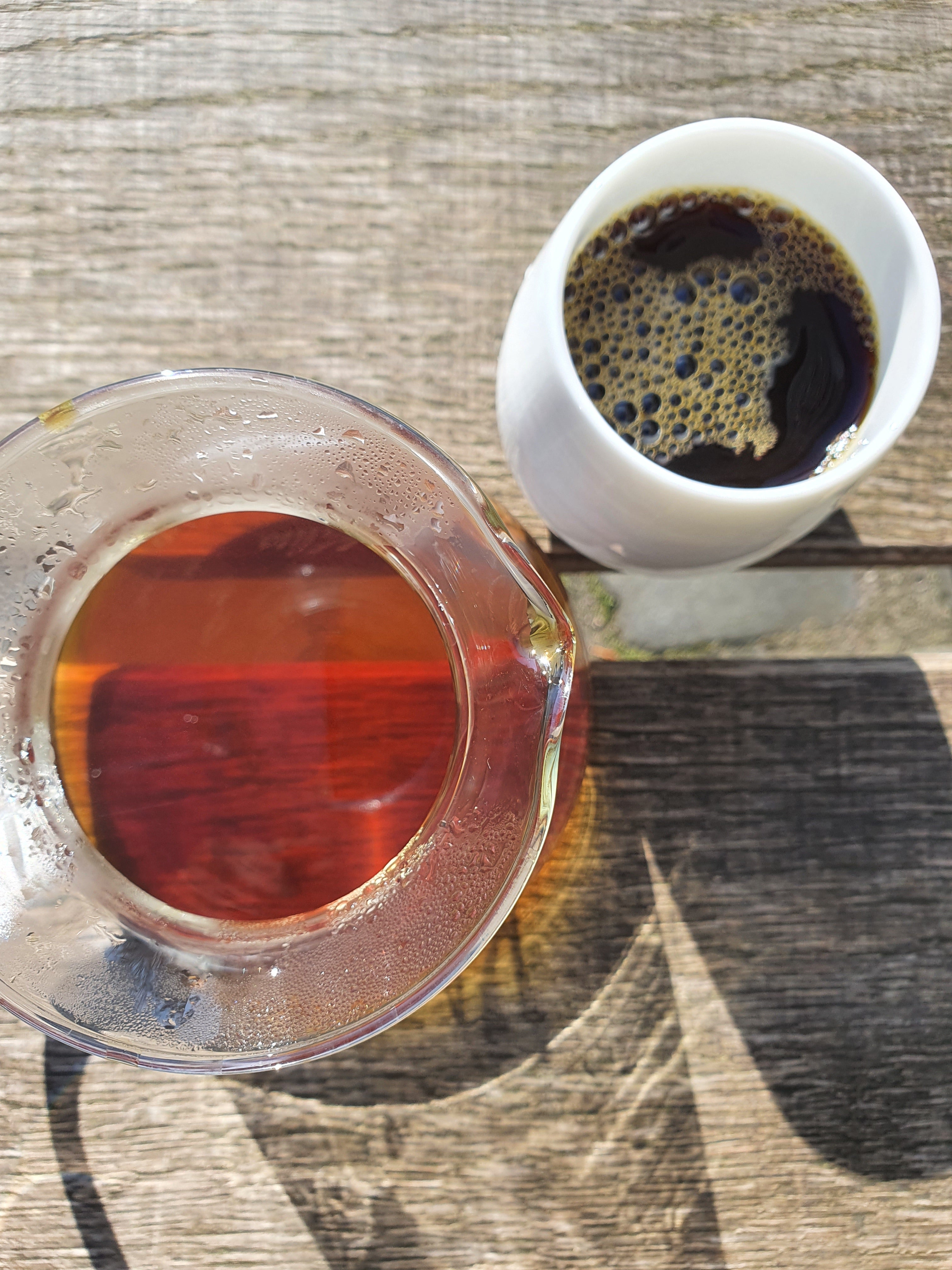
Comparing the Kalita Wave and the V60
The V60 and Kalita Wave are both excellent pour over brewing devices - but which is best for a beginner who is just star
www.steampunkcoffee.co.ukWhat Each Dripper Is Actually Like
HARIO V60 (Cone, Single Hole) — Maximum Creative Freedom
Of all five drippers here, the V60 is the one where pour technique most directly shapes the cup. Acidity can be made bright and forward; aroma rises with real dimension; sweetness, when drawn out properly, has a long finish. But pouring tightly at the center versus spreading wider across the bed changes everything — body, aftertaste, even overall weight. A single bean can express itself anywhere from transparently light to noticeably dense depending on how you pour, which makes the V60 ideal for anyone who wants to explore that range.
For a beginner's starting recipe: 15 g coffee, 240 ml water, 90–92°C for medium roast, 30-second bloom, total extraction targeting 2:30–3:00. Splitting the pour into about four stages works well — roughly 40 ml for the bloom, then build to 240 ml with small circular pours centered in the bed. This pulls out the V60's characteristic clarity and lift. For light roasts, raising to 95°C sharpens acidity; for medium-dark, drop to ~90°C; for dark roasts, 88°C rounds off harsh bitterness.
Usability, honestly: powerful once you've got the feel, trickier at first. A slightly fast pour and you're in the 2:00–2:15 range — thin and flat. Slightly too cautious and you cross 3:00 — heavy and astringent. On a weekend when you're playing with recipes, the V60 is genuinely exciting. For a consistent morning cup every day, it takes more attention than a stability-oriented dripper.
The main tension: the V60's freedom means there's no single "correct" answer, which makes it harder for beginners to calibrate. A great cup today, a slightly thinner one tomorrow — was it the bean? The grind? The pour? Pinpointing the cause isn't always easy.
Where opinions split: the V60's definition means neither the bean's best qualities nor its rough edges are hidden. People who love brightness and transparency will adore it. Those who want "same great cup every day" or "sweetness and body without fuss" may find it unsettling.
Best for: brewers who enjoy shaping flavor through pour; those who want to highlight the distinct character of light roasts or single origins. May not suit: anyone whose primary goal is fewer failures, or those who need reliability on hectic mornings.
OGP card target: "HARIO V60"
Kalita Wave 155/185 (Flat Bottom, Three Holes) — Even Extraction, Consistent Results
The Kalita Wave absorbs pour inconsistencies and makes it easy to land a well-integrated cup. Acidity stays round rather than sharp; bitterness stays in its lane; sweetness develops gradually through the mid-to-late cup. Body is full without being heavy, and aroma feels cohesive rather than flashy. The Wave reaches a high level of consistency early on, and that's the clearest reason for its strong reputation among beginners.
Brewing recipe: 15 g coffee, 240 ml water, 90–92°C, 30-second bloom, 2:30–3:00 total. The Wave doesn't require finely divided pours — two or three additions after the bloom are enough to build a complete cup. Pouring gently across the entire bed without disturbing the grounds too much tends to bring out the sweetness and roundness. For light roasts, 95°C compensates for lower solubility; medium-dark roasts work well around 90°C; dark roasts at 88°C keep aftertaste in balance.
Usability is genuinely high. Pour position doesn't need to be precise, and extraction time stays relatively consistent even without careful technique. That makes a real difference before work in the morning. Personally, the days I feel least sharp are exactly when the Wave's reliability is most appreciated.
The tradeoff: that same consistency means dramatic flavor transformation through pour isn't really on the table. You can adjust with water temperature and grind, but it's a different game than shaping the cup with pour technique the way the V60 allows. The Wave also commits you to its proprietary wave-shaped filter.
Where opinions split: some drinkers experience the Wave's integration as "easy to drink," while others find it a bit too settled. If you want sharp, assertive acidity in the foreground, the Wave may feel underwhelming. But for a cup that never gets tiring across the week, it's hard to beat.
Best for: those who want to minimize mistakes from the first cup; anyone who prioritizes sweetness and overall coherence. May not suit: brewers who want to actively manipulate flavor through pour; those chasing crisp, defined acidity up front.
OGP card target: "Kalita Wave Dripper"
Kalita 101/102 (Trapezoid, Multiple Small Holes) — Full Body, Consistent Landing
The Kalita 101/102 delivers the characteristic reliability of a trapezoidal dripper along with natural, easy-to-achieve body. Acidity is soft and settled; bitterness is present but never sharp; sweetness spreads quietly rather than standing out. Aroma is calm rather than vivid — this is a cup for everyday drinking, and it hits that mark reliably. "Actually delicious" and "hard to ruin" describe it well.
Same starting recipe: 15 g, 240 ml, 90–92°C, 30-second bloom, 2:30–3:00 total. Rather than pouring tightly at the center, I find the trapezoidal dripper works best when you gently distribute water across all the grounds to keep them evenly saturated. Three additions after the bloom brings out the best balance of body and finish. Light roasts at 95°C to define the aromatics; medium-dark at 90°C; dark roasts at 88°C to control bitterness — the trapezoidal design handles these adjustments well.
Ease of use is high. Even a slightly uneven pour rarely breaks the core of the extraction, and the range between "too thin" and "too heavy" is narrower than with cone-shaped drippers. You don't need to develop any particular skill to produce a coffee-forward, satisfying cup — which makes it an excellent tool for daily use.
One limitation: if you're trying to bring out the brightness and fruit character in a light roast, the Kalita 101/102 doesn't give you the lift the V60 can produce. This isn't a flaw — it simply tends to round and settle flavors, which for some beans reads as "delicious but a little restrained."
Where opinions split: that roundness feels reassuring to some and under-stimulating to others. For chocolate, nut, and deep-sweetness profiles, the Kalita 101/102 is a great match. For floral or sharply citric notes, you may want a different tool.
Best for: full-body fans; those who want a reliable everyday recipe. May not suit: brewers who prioritize aroma clarity and transparency above all.
OGP card target: "Kalita 101 Dripper"
Melitta Single-Hole Dripper (Trapezoid, One Hole) — Regulated Flow, Strong on Consistency
The Melitta single-hole dripper regulates flow even more firmly than other trapezoidal designs, making it particularly strong at simplifying the brewing process and maintaining reproducibility. Acidity has its edges rounded off; bitterness is gentle; body carries a natural fullness. Sweetness doesn't jump forward early, but it builds in the finish. Aroma is integrated rather than attention-grabbing — this is a dripper that makes "no-fuss delicious" feel easy.
Beginner recipe: 15 g, 240 ml, 90–92°C, 30-second bloom, 2:30–3:00 total. The single hole makes flow predictable, so two or three gentle pours after the bloom are all you need. Rather than forcing a thin, precise stream, focus on keeping all the grounds saturated evenly — the dripper handles the rest. Light roasts at 95°C open up the aromatics; step down to 90°C and then 88°C as roast deepens, and the bitterness stays well-shaped.
Usability is solid. As long as water volume is roughly right, extreme over- or under-extraction is hard to achieve, and beginners can hit a consistent strength from the start. In my experience, this is a tool that's better at "keeping you in the good zone" than at "rewarding precise technique." For mornings when you just need a dependable cup, that quality is worth a lot.
The constraint: limited expressive range. The Melitta single-hole isn't designed for actively shaping flavor through pour, and that trade-off is real. For brewers who find the device-technique dialogue exciting, this one will feel too settled.
Where opinions split: the consistency reads as either "reassuring reliability" or "not much to work with," depending on what you want from brewing. For rich, approachable everyday cups, it's excellent. For showcasing bright, layered light roast aromatics, it rounds things off a bit too much.
Best for: anyone who wants maximum simplicity; those who value a consistent strength baseline. May not suit: brewers who want to actively develop pour-based technique or translate pour variation directly into flavor.
OGP card target: "Melitta Single-Hole Dripper / Aroma Filter"
HARIO Switch 02 (Immersion Hybrid) — Process Control and Reproducibility
The HARIO Switch 02 combines the clarity of pour-over with the uniformity of immersion brewing. Acidity extracts evenly; bitterness is structurally protected from spiking; sweetness is accessible; body is adjustable via steep time; aroma expands with a soft, rounded quality. The interesting thing about this dripper is that it builds on V60-style brightness as a foundation while significantly reducing the difficulty of the pour.
Starting recipe: 15 g, 240 ml, ~90–92°C for medium roast, 30-second bloom — but the Switch adds a unique step of brewing with the valve closed first. For example: bloom with the dripper closed, add the rest of the water and let it steep for a set time, then open the switch and drain. This approach makes even extraction much easier. Total time targets 2:30–3:00, with cup strength adjustable by when you open the valve. For light roasts, 95°C opens up the aromatics; medium-dark at 90°C; dark roasts at 88°C control heaviness effectively with the Switch's consistency working in your favor.
💡 Tip
With the Switch, "consistent water volume and timing" matters more than "precise, controlled pouring." Standardizing your process shapes the cup — not hand dexterity.
Usability is high. The pouring unevenness that creates problems in pure pour-over is minimized here, and cup-to-cup consistency is strong when you follow a set recipe. Personally, for light roasts where I want clean acidity but find the V60 a little unpredictable, the Switch's stability is genuinely useful. The added cup density is a bonus — this isn't just easier brewing, it produces cups worth drinking.
One note: because the Switch assists your technique, it's not the best tool for developing pure pour-over skills. If your goal is improving V60 pour control, the Switch helps in ways that don't directly transfer. And as mentioned, the ~2,890 yen (~$19 USD) reference price is a useful data point, but this section is focused on brewing character rather than purchase decisions.
Where opinions split: how much you value the feeling of being in control. The confidence of knowing you can consistently brew something delicious is significant — but for brewers who find pleasure in the tactile craft of drip technique itself, the Switch may feel too managed.
Best for: brewers who want to reduce technique dependency; those who want both consistency and cup thickness. May not suit: those working to develop pure pour-over technique; brewers who want pour variation to map directly onto flavor.
OGP card target: "HARIO Switch"
V60 vs. Kalita Wave: Which Is Better for Beginners?
Flavor Differences and Tendencies
The bottom line: V60 offers more expressive freedom; Kalita Wave is easier to brew consistently. For a beginner, the difference isn't just about shape — it goes directly to how much you want to shape the flavor versus how reliably you want to repeat it.
The HARIO V60's cone shape and large single hole let you control how water moves through the grounds with your pour. That translates to a wide flavor range. You can push bright, clean acidity forward for a light, vivid cup, or pour tightly at the center to build sweetness and body. When the V60 clicks, the aroma lifts clearly and the finish stays transparent. For light roast beans with berry or citrus character, this expressiveness is genuinely exciting.
The Kalita Wave's flat bottom and wave filter pull extraction fairly evenly from all the grounds. The result is a cup where acidity is soft, sweetness and roundness come forward, and everything holds together. Less dramatic in how it responds to pour, but it integrates the cup beautifully. Brewed with medium to medium-dark roasts, the Wave produces a smooth, stable cup from first sip to last.
Both Steampunk Coffee's V60 vs. Wave comparison and CROWD ROASTER's analysis reach the same conclusion: the V60 has wider creative latitude; the Wave is built to reliably land a stable, consistent cup. Think of V60 as a tool for targeting a specific expression, and the Wave as a tool for consistently assembling a great one.
A quick comparison:
| HARIO V60 | Kalita Wave | |
|---|---|---|
| Shape | Cone | Flat bottom |
| Holes | One large hole | Three holes |
| Flavor tendency | Clear, wide adjustment range | Round, sweetness-forward |
| Difficulty | Moderate-high | Low |
| Reproducibility | Technique-dependent | High |
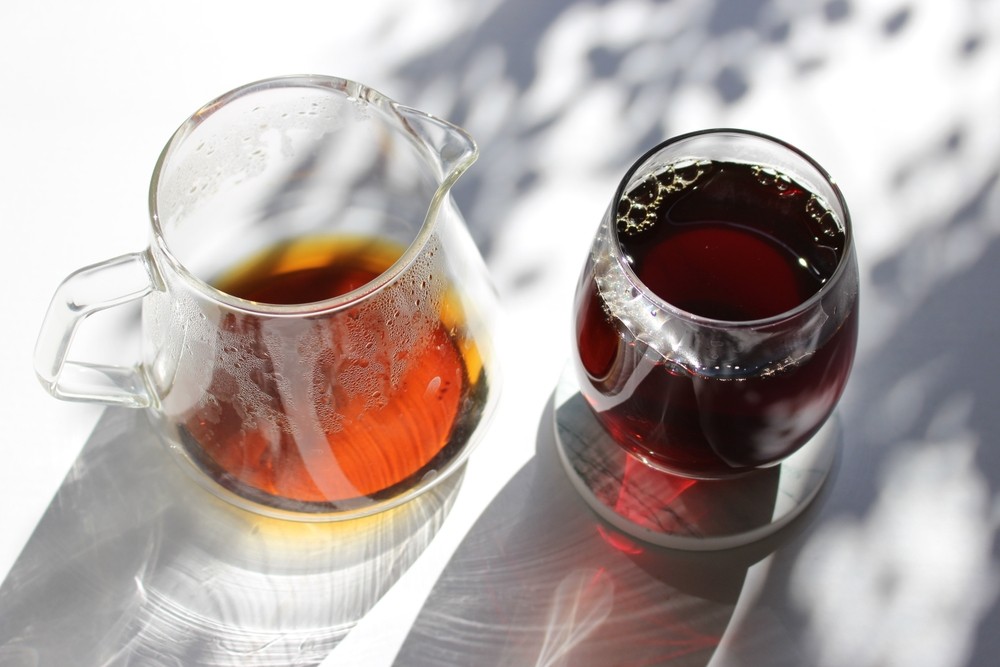
ドリッパー対決「ハリオV60」VS「カリタウェーブ」 | CROWD ROASTER
今まで様々なドリッパーを紹介してきましたが、ほんとうに器具によって味わいは違うのか、そんな疑問を持つ方も少なくないと思います。そこで本企画ではドリッパーごとによる違いを比較して...
crowdroaster.comPour Difficulty and Reproducibility
The biggest practical difference between these two comes down to: does a slight inconsistency in your pour show up in the cup?
With the V60, the flow changes with pour position, speed, and volume distribution. The same recipe can feel quite different from one brew to the next. That's both a strength and a limitation. A skilled, controlled pour can highlight acidity, build sweetness, or draw out the bean's distinct character. But for newer brewers, "drained too fast today" or "came out heavy again" are common. As noted earlier, extraction time variability is higher on the V60, and technique shows.
The Kalita Wave is more forgiving here. The wave filter levels out the contact surface, and the flat bottom keeps water from pooling unevenly. As long as you avoid pouring off-center or aggressively disrupting the grounds, the cup holds together well — even imperfect pours rarely collapse it. On a tight morning schedule, that reliability is a genuine asset. Brewing the Wave, you can expect to land in roughly the same place each time, which makes the consistency easy to feel and build on.
ℹ️ Note
If you want to enjoy improving your technique, go V60. If you want to reliably brew a great cup from the start, go Kalita Wave. That's the most practical split.
For reproducibility, beginners find it easier to understand "why today's cup was good" with the Kalita Wave. When technique variation is lower, differences in bean, roast level, and water temperature become more readable. The V60 does the opposite — your technique development shows up directly in the results, making it better for learning extraction. The dripper gives you less help, which means more feedback.
Choosing Based on Your Situation
One-line answer: Wave if you want stability fast; V60 if you want freedom to explore. This isn't about preference — it's about what you're optimizing for.
The Wave is right for you if you want a reliable morning cup without stress, want to minimize mistakes when brewing for others, or just want "good, every time" before worrying about flavor nuance. It habits-izes well — less pour anxiety means you'll actually brew more often. The Wave rewards consistency over expression.
The V60 is right for you if you want to vary flavor from the same bean, or if exploring the brightness and acidity of light roast and single-origin coffee sounds appealing. Early on there will be inconsistency, but learning to read "why it changed" is what opens up the real depth of pour-over. Brewing as a hobby has a natural home in the V60.
If still undecided, start with a 1–2 cup size as discussed earlier. A single-cup format works well for both V60 and Wave, and the differences between them become easier to feel when you're working with the right bed depth.
A few case-based decisions:
- Minimizing failures is the top priority
Kalita Wave. High reproducibility; absorbs minor pour inconsistencies.
- Enjoying the craft of shaping flavor
HARIO V60. High freedom; pour choices map directly to the cup.
- Not sure what you prefer yet
Start with the Kalita Wave. Build a stable reference point first, then expand to the V60 once you have a baseline.
- Focused on light roasts and complex aromatics
V60. Better at producing clarity and clean, bright lift.
- Enjoying medium to medium-dark roasts in an easy, mellow style
Kalita Wave. Sweetness and roundness are its strengths, and it holds up well to daily drinking.
In terms of beginner-friendliness, the Wave has the edge — not because the V60 is a bad choice, but because the Wave gets you to reliable results faster. Wave for the shortest path to consistency; V60 when you also want room to grow. Framed that way, the right choice for you becomes much clearer.
Why Different Drippers Produce Different Flavors
Flow Rate and Contact Time
The core reason drippers produce different-tasting coffee is that water drains at different speeds and stays in contact with the grounds for different lengths of time. Visible shape differences aren't design quirks — they determine how extraction actually happens.
Take the HARIO V60 as an example. Its cone shape builds a deep coffee bed toward the center, funneling flow toward a single large hole at the bottom. Pour position and volume distribution directly control how fast water moves. Faster drainage produces a lighter, cleaner cup; slower drainage brings out sweetness and body. With the same dose and water volume, changing how you pour can produce noticeably different results in the final cup.
Kalita trapezoidal drippers and Melitta-style designs take a different approach — the dripper itself manages flow to a degree. Smaller, more restricted holes combined with the filter shape prevent water from draining too quickly. This extends contact time between water and grounds, supporting more consistent extraction. That's why beginners are less likely to end up with "too thin" or "too heavy" results.
The Kalita Wave's flat bottom is less about finding a middle ground and more about excelling at uniformity. The even bed depth and three-hole drain mean extreme flow variation is unlikely — less dramatic than the V60, but livelier than a trapezoidal model. The result tends toward sweetness and smoothness without becoming heavy.
The key point: flavor differences can't be reduced to hole count alone. Hole diameter, number of holes, filter shape, and bed depth all work together to determine flow rate. The reason cone, trapezoidal, and flat-bottom drippers taste different is that they create fundamentally different water paths during extraction.
Immersion versus pour-over fits naturally into this framework. Pour-over methods like the V60 let you shape how compounds are extracted as water moves through — this is where technique turns into flavor. Immersion-capable drippers like the HARIO Switch steep the grounds uniformly before draining, making even extraction easier to achieve and maintain. Pour-over is about building flavor through pour; immersion is about equalizing extraction.
The Role of Ribs and Holes
The grooves running along the inside wall of a dripper — called ribs — do more than they appear to. Often overlooked, they serve a critical function: lifting the paper filter away from the wall to create air channels and water pathways during extraction.
The HARIO V60's deep ribs are a clear illustration. Because the paper can't collapse flat against the wall, airflow is maintained throughout the extraction, and water has consistent room to pass through. Pouring tightly at the center drains faster; using the full bed surface changes the flow character noticeably. The V60's reputation as a "pour-responsive" dripper is partly about the single hole, but the ribs deserve equal credit.
By contrast, drippers with shallower or more restrained ribs — where the filter touches more of the wall surface — produce calmer, more regulated flow. Less airspace between paper and wall means water moves more quietly, and extraction stays closer to the stable side. This is part of why trapezoidal drippers behave so reliably for everyday use.
Bottom hole design also shapes flavor direction. A single large hole can drain rapidly with an aggressive pour, or hold water longer with a controlled one — this is the V60's expressive range in structural form. Multiple smaller holes distribute the flow and resist sudden changes in drain rate. The Kalita Wave's three holes and the trapezoidal models' small-hole design both contribute to their stability in this way.
This "pooling" effect connects directly to body. When the hole is small and drain is slower, water lingers in the dripper longer, extending contact time — which builds richness. Faster-draining designs produce cleaner, lighter cups. Neither is superior; they're just different flow characters that the dripper's design creates.
Kurasu's dripper guide makes this well, organizing how structural differences in shape and material translate to extraction outcomes. For beginners, you don't need to memorize the engineering. Just remember: ribs = "air and water pathways"; bottom holes = "how much pooling happens before draining."
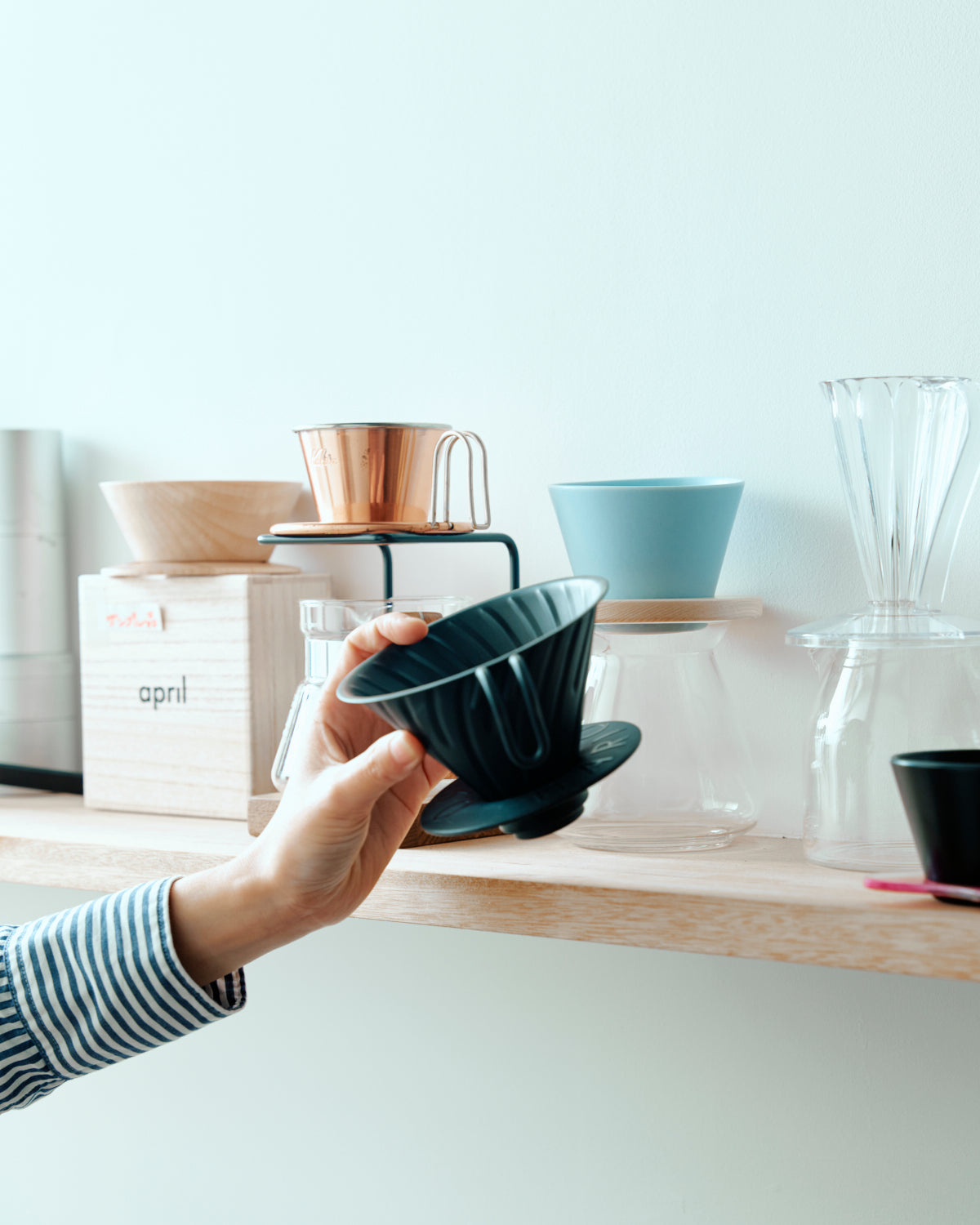
コーヒードリッパーの選び方|素材・特徴・おすすめを徹底解説
「おすすめのドリッパーを知りたい」「素材によってどんな味の違いが出るのかわからない」そんな方のために、素材別の特徴を比較、Kurasuおすすめのドリッパーも紹介。自分に合う一杯を見つけよう。
jp.kurasu.kyotoMaterial, Heat Properties, and Temperature Retention
Material differences are real and worth understanding. Plastic, ceramic, glass, and metal all conduct heat differently, and that affects temperature maintenance during extraction. Since brewing temperature shapes flavor extraction, how much heat a cold dripper absorbs from your first pour matters.
Plastic is the most forgiving material, especially for beginners. It's light, won't absorb much heat from your pour, and doesn't require significant preheating to avoid temperature drop. This makes it easier to consistently hit your target extraction temperature from the first pour. For daily single cups, that straightforwardness consistently pays off.
Ceramic and glass are premium in feel and look great once warmed up. But starting from cold without preheating, they pull heat from the first pour — sometimes significantly. When temperature drops in the first 30–60 seconds of brewing, you'll often notice: aroma is present but sweetness doesn't open, and acidity jumps to the front before the cup integrates. Metal responds fastest in both directions — it heats and cools quickly, which requires a bit more careful handling.
The takeaway: material has an effect, but shape and flow are the dominant drivers of flavor difference. Plastic V60 versus ceramic V60 is a noticeable gap, but V60 versus trapezoidal is far more obvious to a beginner. Think of material as a fine-tuning variable and shape as the structural one.
The clearest way to feel this at home: brew the same bean at the same grind and water volume on a V60 and a trapezoidal dripper side-by-side. Record time-to-drain and a quick tasting note for each. "Drained fast — lighter cup; longer contact — more body" becomes immediately intuitive. PostCoffee's comparison of cone versus trapezoidal drippers covers the same ground conceptually, but experiencing it in the cup locks it in.
When dripper selection feels confusing, look past aesthetics and material. Understand how flow rate, contact time, ribs, hole design, and thermal properties interact in a given model. Every design choice exists for a reason, and that reason shows up in your cup.
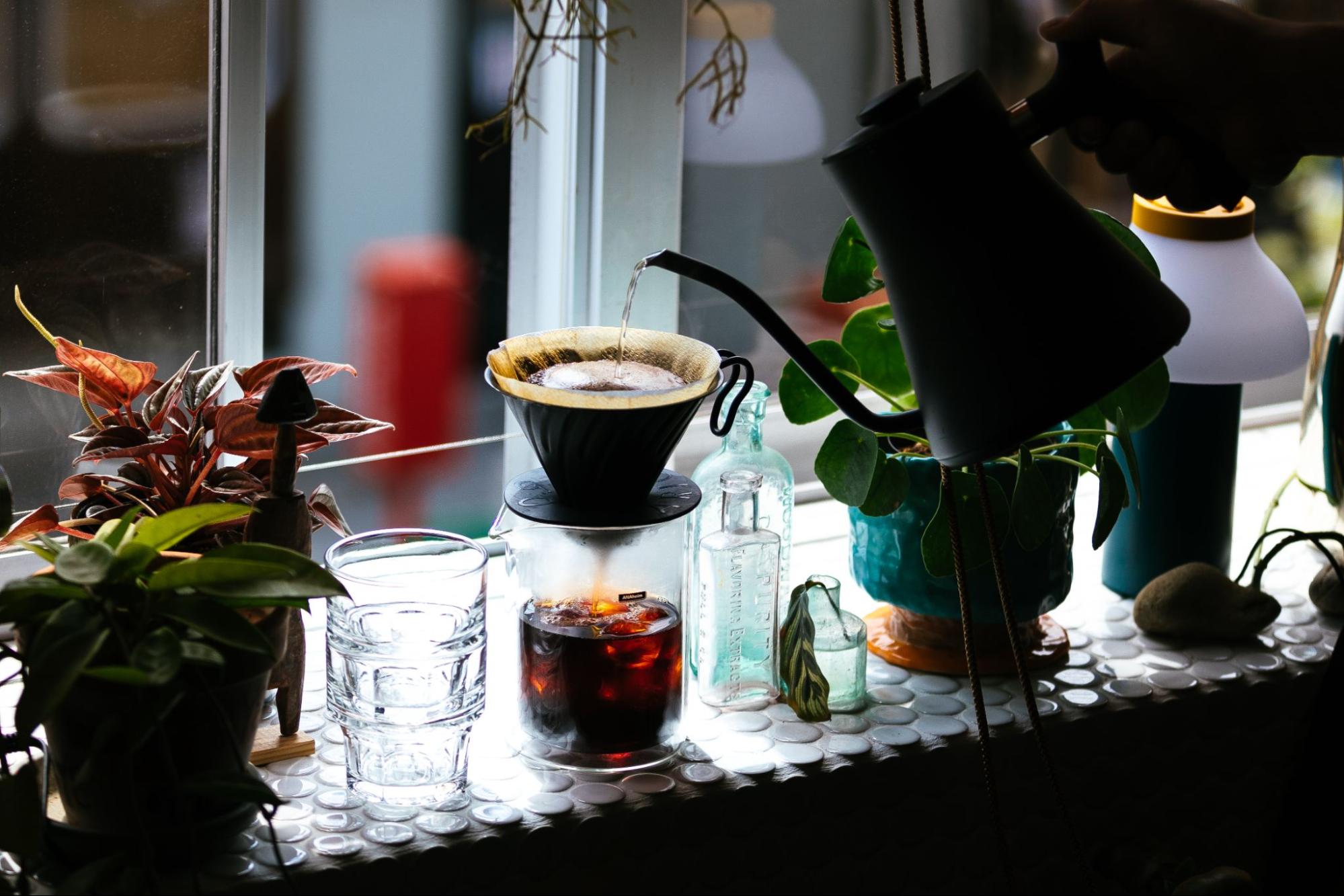
【初心者向け】これからハンドドリップを楽しみたい人へ。ドリッパーの選び方をご紹介! - コーヒーマガジン | PostCoffee(ポストコーヒー)
リモートワークやオンライン授業が当たり前になり、お家で過ごす時間が増えた今日この頃。そんな在宅時間でハンドドリップのコーヒーを楽しむために、これからグッズを揃えるという人も多いのではないでしょうか。今回は、コーヒーライフには欠かせないドリッ
postcoffee.coQuick-Reference Chart: Match Your Goal to Your Dripper
When you're stuck, the most useful question isn't "which one is best" — it's what kind of cup do you want, and how much effort are you willing to put in. After working through shape and hole differences above, the choice simplifies. Use the chart below to narrow it down fast.
| Goal | Model | Why |
|---|---|---|
| Consistency | Kalita Wave / Melitta single-hole / Kalita 101 | Absorbs pour variation; produces even, round, reproducible cups |
| Flavor crafting | HARIO V60 | Pour technique drives acidity, sweetness, and body — full creative range |
| Speed and simplicity | HARIO Switch | Immersion for reproducibility; steep time does the work |
| Aesthetics | Kalita Wave (stainless/glass) / HARIO V60 (glass/ceramic) | Daily-use gear that's genuinely satisfying to own and handle |
| Budget | HARIO V60 (plastic) / 100-yen shop cone or trapezoidal | V60 plastic runs around 1,000 yen (~$7 USD); 100-yen shop models at 110 yen (~$0.70 USD) work as an introduction |
Consistency
For the most repeatable cup, Kalita Wave is the strongest choice. Flat bottom plus three holes keeps flow from going erratic, and even an imperfect pour rarely breaks the cup. For a quick morning brew, that "round, settled landing" is genuinely reliable. Acidity stays smooth; sweetness and gentle body come together naturally.
If you prefer a more classic kind of consistency, the Melitta single-hole and Kalita 101 are equally dependable. Both are trapezoidal, meaning water drains at a measured pace and extreme flow variation is uncommon. Rather than maximizing clarity, these drippers aim for even, rounded cups with good drinking comfort. Less sharp acidity, more everyday balance.
Flavor Crafting
For varying expression from the same bean through pour technique, HARIO V60 is where the fun is. Pouring tight at the center builds density; widening out toward the edges opens up the cup. The deep cone layer and large single hole translate those decisions directly into flavor — where acidity lands, how sweetness stretches, how body distributes.
The V60 isn't only about clean, light cups. With the right pour, you can draw out sweetness and substantial body from the same light roast that produces a brighter cup when poured differently. You're designing acidity, sweetness, and body yourself — and while reproducibility takes time to develop, that creative latitude is the whole point for some brewers.
Speed and Simplicity
For "fewer decisions, no compromise on quality," the HARIO Switch fits well. Unlike a conventional pour-over where you're managing flow by hand throughout, the Switch lets you immerse the grounds uniformly before opening the valve — reducing the main source of pour-over inconsistency. The process is straightforward enough to run on autopilot in the morning.
The Switch's real strength is that reproducibility is built into the process rather than the technique. You can prepare your cup while the coffee steeps, and that downtime isn't wasted. At a reference price of around 2,890 yen (~$19 USD) (varies by retailer), it offers a clear value proposition for anyone who finds pure pour-over technique a little stressful.
Aesthetics
Gear you see every day is worth caring about — prioritizing how it looks and feels to own is a completely valid way to choose. For premium feel, the Kalita Wave in stainless or glass and the HARIO V60 in glass or ceramic are both satisfying choices. Light reflection, surface texture, the weight in your hand — these details make the brewing ritual feel a little special each morning.
Shape drives flavor more than material, but a dripper you're genuinely excited to reach for gets used more often. If the sharp, modern look of stainless steel appeals, Wave stainless makes sense. If you prefer the warmth of ceramic or the transparency of glass, V60 ceramic or glass fits naturally. Coffee gear is both functional and part of a hobby — it's fine to let aesthetics carry some weight.
Budget
For the most cost-effective entry point, the HARIO V60 plastic model is the anchor recommendation. It runs around 1,000 yen (~$7 USD) in most markets — light, durable, and easy to use. Plastic's practical advantages (no preheating required, resistant to breakage) reinforce the value. Flavor-crafting capability is real, so it doesn't become obsolete once you improve.
To go even cheaper, 100-yen shop cone or trapezoidal drippers (around 110 yen / ~$0.70 USD) work as an entry point. The key things to check: that filter paper fits, and that the ribs aren't extremely shallow. They won't match dedicated models in quality, but they do one thing well — letting you feel the difference between cone and trapezoidal shapes before committing to anything more.
One Week to Get Comfortable: A Practice Menu
Days 1–2
The first two days are about ingraining a baseline cup by holding all variables constant. Pick a recipe and stick with it: 15 g coffee, 240 ml water, 90–92°C, total extraction 2:30–3:00. Brew with the same dripper twice per day. The goal isn't precision — it's seeing how much total drain time varies between brews.
Don't stress about evaluating flavor yet. Just keep an eye on the timer and note results like "first brew: 2:52, second brew: 3:01." At this stage, the V60 will likely show more run-to-run variation even with consistent intent; the Kalita Wave and trapezoidal models will be more stable. Watching time variation before watching flavor makes later adjustments much easier to interpret.
Days 3–4
On days three and four, change exactly one variable: pour pattern only. Try pouring tightly at the center for the first half, then widening to a gentle spiral for the second. Keep bean weight, water volume, and temperature the same — that way, flavor shifts are attributable to pour, not noise.
After each brew, leave a quick five-element tasting note: acidity, bitterness, sweetness, body, aroma. Short observations work fine — "acidity was a little forward," "bitterness low," "sweetness in the finish," "body light," "aroma bright." With the V60, a center-focused pour tends to tighten the flavor profile; wider pours open it up. With the Wave or trapezoidal drippers, differences are smaller — but noticing that "the difference is small" is itself useful data about the dripper's consistency.
Days 5–6
Days five and six: return to your standard pour, and now shift water temperature by ±2°C. By this point you have a baseline cup, so a two-degree difference will feel more significant than you might expect. Medium roast stays near baseline; light roast goes slightly higher, dark roast slightly lower to bring out the bean's best character.
Pushing light roast temperature up reveals aroma clarity and the acidity's core more distinctly. Dropping dark roast temperature softens bitterness and rounds the finish. Even two degrees can change the texture of the aftertaste. What you're looking for here isn't "which temperature is correct" — it's which direction your own preferences lean. Coffee has its science, but the cup you actually want to drink every day isn't determined by data alone.
Day 7
Day seven: reproduce the best cup from the week. No new experiments — just rebuild the conditions and see whether you can hit it again. If you can, that recipe is already a solid daily baseline.
If you reach this point and find that V60, Kalita Wave, and trapezoidal drippers feel more similar than expected, that's not a failure. At that stage, the useful criteria shift to aesthetics, workflow, and price — and that's completely fine. Chasing flavor differences that aren't clearly showing up yet is less useful than asking: does this dripper fit my morning routine? Does using it feel right?
From my own notes: brewing the same dose and volume repeatedly, the HARIO V60 settled around 2:45 ± 5 seconds once I got comfortable with it. The Kalita Wave landed closer to 2:35 ± 3 seconds — and for daily mornings, that tighter spread is exactly where its value lives. Watching your own convergence like this reveals "the right dripper for you" not just by flavor, but by how naturally it fits your hands and your habits.
Frequently Asked Questions
If you're still unsure, two questions are enough to make the call: "Can I reach for this every day without friction?" and "Can I restock the paper filters easily?" Personally, I'd start with a plastic 1–2 cup dripper and brew only that for a week. If nothing frustrating comes up, that was the right choice. Dripper selection isn't about finding the objectively correct answer — it's about finding the one you'll actually keep using.
A home roaster with 12 years of experience, handling everything from sourcing green beans to designing roast profiles and testing extraction recipes. Certified Coffee Instructor (Level 2), he cups over 200 varieties annually and delivers recipes focused on reproducibility.
Related Articles
Kalita vs Melitta: 1-Hole or 3-Hole Dripper?
Melitta and Kalita are both classic wedge-shaped drippers, but choosing between them comes down to more than just hole count. Brew a consistent weekday morning cup with Melitta's single-pour method, then spend your weekend dialing in flavor with Kalita's multi-pour approach — that rhythm fits a lot of coffee drinkers.
Top 5 Manual Coffee Grinders in Japan | Selection Guide and Comparison
Manual coffee grinders are quieter than electric models, more affordable, and highly portable—ideal for coffee lovers in Japan. However, they grind limited quantities at a time and are best suited for slowly enjoying one or two cups, so choosing based on popularity alone often leads to frustration.
6 Best Home Espresso Machines by Type
If you're not sure which home espresso machine to buy, the clearest path is to split your options into three types — fully automatic, semi-automatic, and capsule — then narrow down to the machine that fits how you actually live. Chasing specs rarely helps. Start instead with two questions: how much time can you spare in the morning, and how much do you want to control your latte?
Hario V60 Characteristics and Brewing Method | Why It's Popular and Basic Recipe
The Hario V60 remains a standard in Japan because its conical shape, single large hole, and spiral ribs transform the pouring method itself into flavor creation. The flexibility to brew either light and delicate or thick and sweet flavors makes it beloved in both home kitchens and professional coffee shops.